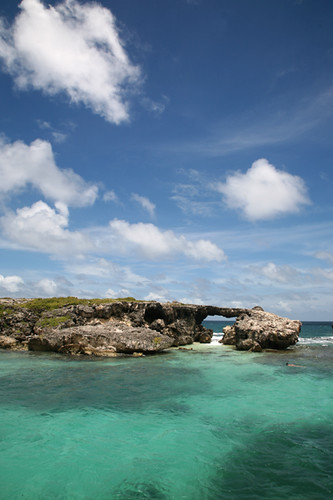
 Busy busy in Antigua. Usually August is a fairly slow month for us in Antigua with nice weather in general in North American and in Europe. This August has been very busy here on the island with many of the hotels being quite full. I know after speaking to my Grandmother who lives in England, that the weather there has been terrible. She said its been the worst summer that she can remember up there which is why so many people have been coming here looking for sun.
 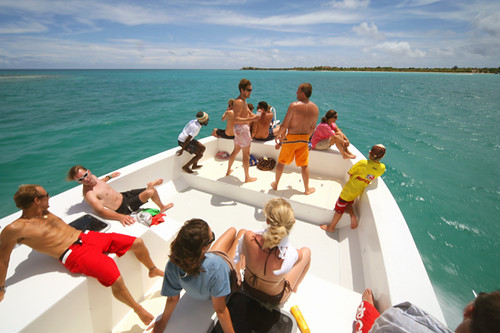 We took a group of people out on a private birthday charter and so many were moaning about how awful the British weather had been. And apart from a few days in August it has been an incredibly sunny summer here in Antigua and Barbuda with drought on the islands being a big problem until recently. People all over the world are so obsessed with weather and when you have put up with rain, snow, cold and clouds for most of the year I guess you would be kinda worried that your Antigua holiday may not be sunny. I always see people on the internet forums worrying about the possibility of rain and clouds ruining their upcoming Antigua and Barbuda vacation. Way way way too many people look at the animated forecasts which I have spoken so much about on other blogs (here). I often wonder how many people cancel their travel plans because of these misleading low tech forecasts and keep telling people to look at satellite photos in motion to see where the clouds will be coming from. A good link is:
For hurricane info there is http://www.weathercarib.com/ or http://www.stormcarib.com/ for reports, but for general weather a good link is always http://www.windguru.com/int/index.php?sc=52075
I have a web tracker on my Antigua blog and look at it often to see where the hits are coming from, which sites referred the hit to mine, and which key words were used in searches. After Hurricane Dean passed by missing Antigua and Barbuda I had hundreds of hits a day. The busiest day was nearly 700 hits and so many of the hits came from google or other search engine queries. The typical search on google was “Did hurricane Dean damage Antigua” or simply “hurricane Dean Antigua”. There were quite a few specific hotel requests like “jumby bay damage Hurricane Dean”. Anyway, I am so happy that my little blog could show people that we had no hurricane damage other than some beach erosion on the south of Antigua and set them at ease. Funny how things work with these blogs but with the web tracker I can see how Antigua internet searches in times of uncertainty can be of great help.
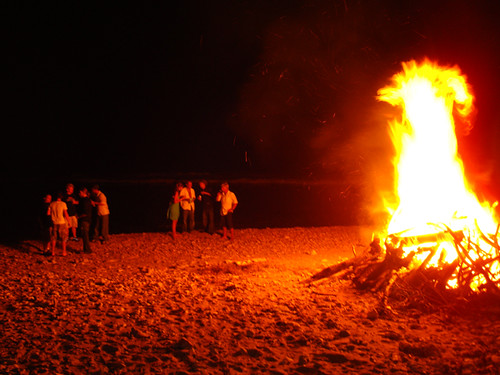
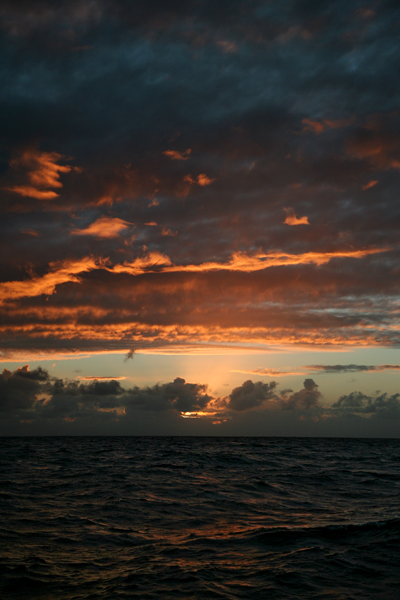
This week has been a busy one for me with work on the boats and many birthday parties including my own little one last night. I took this photo at the end of a very good friend's 40th on sunday night. That was a lovely one on the beach which as a matter of fact got more sand on it during the storm.
 I think this weekend will be a chilled out one with possibly a little fishing and windsurfing. I am thinking of doing several blog reports with photos about learning how to windsurf so that people can almost have a lesson during their lunch brake back in the big city office.
 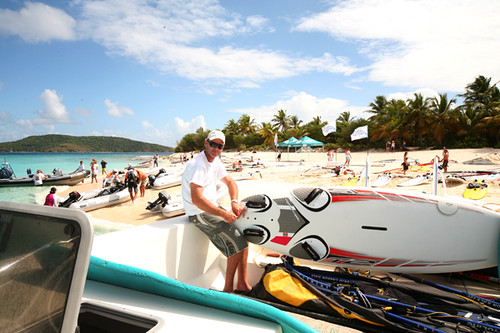 Keep checking for updates and have a good weekend.

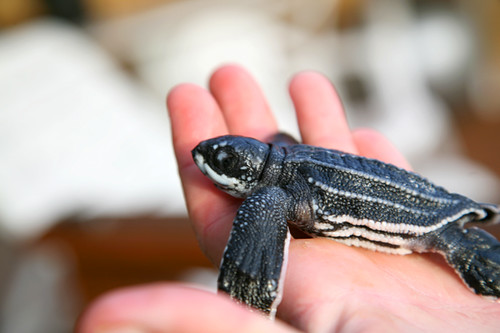
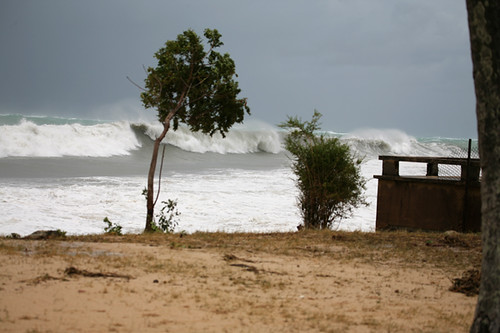 Of course the beaches will get back to normal in no time, but many Hawksbill turtle nests have been washed into the sea. At 1 in 10000 eggs reaching maturity this species could do without hurricane season. My sister Francis Fuller just started working with Antigua's Environment Division and called me yesterday telling me about a nest they found partially washed into the sea at Jabberwock Beach. She said it had recently hatched out so the little guys had already got into the sea. Turtles have evolved in ways which help them in so many situations, but for some reason they haven’t figured out that hurricane season isn’t a good time for beach nesting. I dunno there are other factors possibly which make hurricane season good for nesting. After all, this type of beach erosion from storms only happens once in a blue moon. In fact, the seas are way rougher in the winter months than they are on average in the summer. As long as a hurricane doesn’t pass that close the little eggs will be fine while they sit tight in that sandy nest for 60 nights. If the females are the lucky ones of the season they will return to nest on these beaches twenty years later. With all the changes mankind is bringing upon planet earth there is much uncertainty about what they may find when they come back to nest. For now though, the turtles coming in to nest this next week will be fine on many of our 365 beaches.
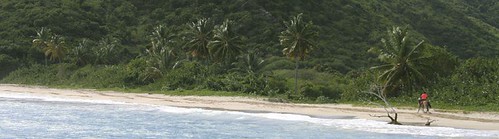 I was doing a walk on the beach checking for fresh nests as we are part of the Antigua Turtle Study run by the EAG and Mykl Clovis, when I came across the nest. The usual tell tale signs of the recent hatch were on the surface. Little white folded over egg shells were scattered around a small indentation in the sand. We were running a bit late, but I quickly started digging up the old nest to check for stragglers. It was slow as the sand on Rendezvous is so fine and it kept falling back into my excavation. I found many successfully opened shells and two or three that seemed to have been unfertilized. I found one that contained what felt like a turtle that didn’t make it. Leatherback turtles are the largest of all turtles and incredibly endangered. Of course there are some beaches on the planet where they come up to nest in large numbers, but in general their numbers are dangerously low. Anyway, the egg was half way between a golf and tennis ball in size and was fairly soft. I opened it worried about the possible smell. To my surprise the dead baby leatherback inside was very fresh and had no smell at all. The nest must have just hatched the night before and the poor little fella looked as if it were just sleeping. It was curled up as if still inside the eggs protection. I guess that’s the turtle fetal position, but it was holding the egg yoke which never got a chance to be its final sustenance before it began its journey into the Atlantic.
 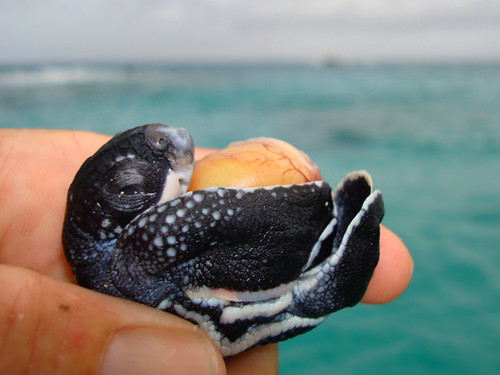 I know the odds are such that it’s very common to find little unfortunates like this but it still was sad to see it like that. Time was running out for our time at Rendezvous and I had to get back to drive the boat back along the remainder of the tour. The rum punch stop, our last stop was at an end. I took the turtle to show the guests and Mykl as well. The photo shows the poor thing in my hand. I guess the good news is that although I didn’t dig up the entire nest, it seemed as though most of the eggs had successfully hatched out. The next day I had a private charter which went to Rendezvous on its first stop. I decided to go and finish digging up the nest with Tony. Some of the guests came along with me and within minutes we pulled out a hatchling. To my surprise is moved, but I could tell immediately that it wasn’t in good shape at all. Its soft shell looked a little out of shape and the movements were so slow that I was sure it was about to die and even said so. The two guests said that we should put it in the water and it did seem to get a little more active once in the sea where it belonged. IT wasn’t strong enough to swim though and I wasn’t sure about its chances. The guests kept it trying to see if it would get stronger and while Tony and I finished digging up the nest and another one near it the little straggler appeared to waken up a bit more. We took it back to the boat putting it into a dark bucket with a little water so that it would be wet but relaxed in the darkness. I got on the phone with Mykl and then Sarah at the Jumby Bay turtle project. They agreed that we should keep it for Jebson a turtle volunteer who has had quite a bit of luck rehabilitating turtles that didn’t make it out of their nests. By the time the sun set, the turtle was looking much better and although I still wasn’t convinced the weak creature would pull through I was beginning to think that against all the odds, it just may be ok. Later we delivered it to Jebson who said that he thought it looked pretty good and thought that he could release it in a few days. He had some special food that he would give it the next day. Unfortunately as if destined to become part of the statistics, the baby leatherback took its last breath that night. Sitting alone in that nest out of the protection of its egg for days was just too much for Rene as we ended up calling her. Her brothers and sisters are now out in the Atlantic trying to be the lucky few that make it back to Rendezvous bay in the distant future. The study that I spoke about which is taking place here in Antigua is finding out so many things about Antigua’s nesting turtle population and the threats that it faces on a daily basis. There is plenty more to find out and although there is currently only funding for this summers study, I hope that it may continue next year. Turtles around the world need all the help they can get. Maybe I will try to set up some sort of donation thing on this blog so that the EAG’s study may continue. The one over at Jumby Bay has been going on for over 20 years and is now one of the world’s leading studies.

 I hope it weakens but at the moment its been undergoing rapid growth and strengthening. I don't think Antigua had any damage from Dean at all except possibly some beach erosion. I drove around this morning and took a few photos. This one was Curtain Bluf's outer reef above Cades.
 This link shows a sequence at Half moon bay.
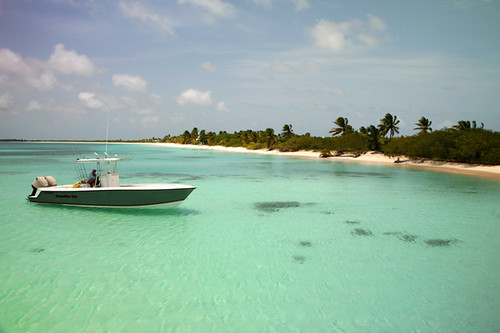 Also, most of my newly acquired passengers would much prefer a little more adventure before the crappy trip back home.
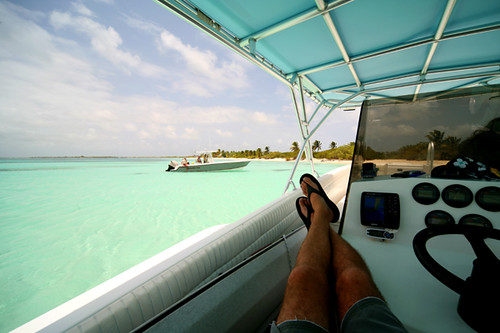 Uncle Jim came up shortly afterwards and so did the other two boats that were staying the extra night at Spanish point further up the coast.
  The waters were just too beautiful to leave like that so Roddy, Mykl, Stevie and Bell went for a quick snorkel just before we set off.
  I took photos and within 30 minutes we were going out the reef into the Atlantic Channel. It was extremely rough but the better angle allowed us to maintain 25 knots the whole way home. Stevie sat up front by himself where is was a bit more bumpy and ended up falling asleep. Every other person on the boat was soaked with all the spray the high winds were jacking up. We were home in no time. As I pulled up to the dock in Jolly Harbour the GPS said we had done 118 miles that weekend and they were all worth the effort and drama. As usual it was a good carnival camping session but now it was time to get back to work.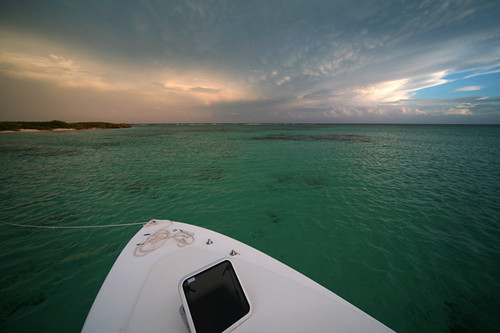
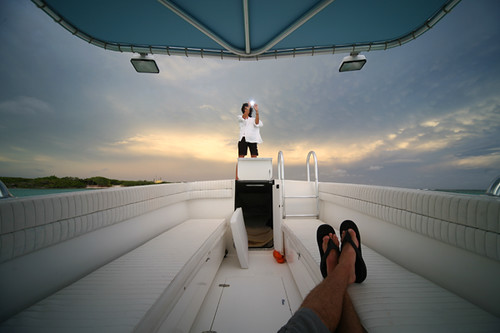 That night we had no more trouble with rain and were able to have some lovely T-Bone steaks on the back of the boat. IT was the end of out meat and we would have catch fish of some sort the next day.
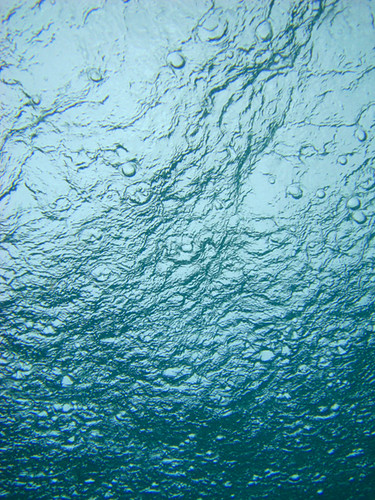
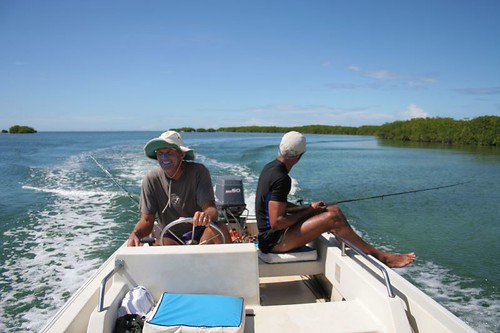
 Anyway, we didn’t stay long and once out the channel again we turned north towards a special fishing spot I knew about five miles away. We put the three rods out to “soak” and nothing happened for some time. Just when we were about to give up we had a double hookup. Mykl fought her fish on the back seat and I fought mine from the port side. Hers came up first and after I put my rod in the holder I tried to get the fish off the hook. The electric blues from the Little Tunnie were dazzling and as we marveled at its beauty the fish managed to free itself and shot off into the dark blue depths. Mine was still on and I didn’t make the mistake of being seduced by its colours this time. In fact the poor fish didn’t have a chance once I had it within grabbing range. We didn’t have to worry about eating canned tuna……we had the real stuff in the boat now. While all this action was taking place we didn’t notice the squall that had quickly crept up upon us. We were not in a good place at all as we were outside some of the most treacherous reef in the entire Caribbean which has been claiming boats for hundreds of years. Nobody ever gets through this section of reef unless they have good light and that was going to disappear pretty quickly if we didn’t act fast. I knew of a tiny channel at a place called Hog Hole and after speaking on the VHF radio to my Dad and Steve Mendes who were just pulling up there on the inside of the reef, I gunned the engines towards the channel. I slowed down once we got into the channel and immediately saw a pod of spotted dolphins. They had been surfing the waves in the channel and I would have loved to stay and watch them but it was way too dangerous with the squall only minutes away. With reef and breaking waves on either side of the boat we crept in carefully making it behind the last bit of reef right as the winds started to pick up. We rushed over to the other boat and dropped the anchor in the sand behind the reef as the rain started to fall. I was in the water with my snorkeling gear before I could get wet from the rains. If you are ever snorkeling when it rains be sure to swim down a bit and look back up at the surface. I took a pic while it was happening but even this doesn’t do it justice.
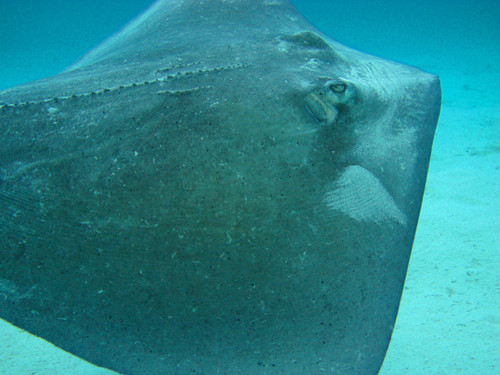
  Stevie’s boat had been full of campers who were all now in the water snorkeling. I guess the winds and waves had gotten up in the squall making the waters close to the barrier reef very cloudy with tiny bubbles. We did manage to see three stingrays and two spotted eagle rays as well as quite a few small fish.
  IT was nice and colourful once the sun covered us again.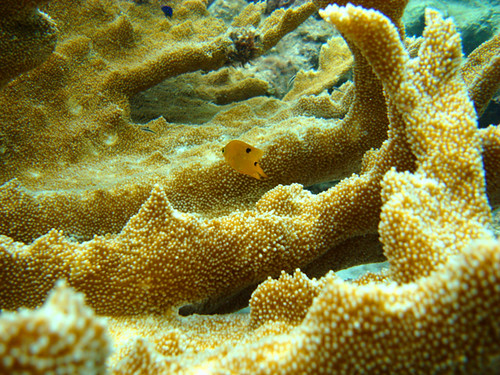

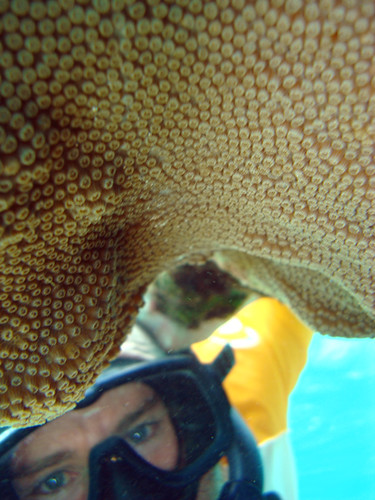 Roddy and Stevie caught a few snappers for their lunch and they all left Mykl and I there. We would meet up with them later in the afternoon at their camping spot.
 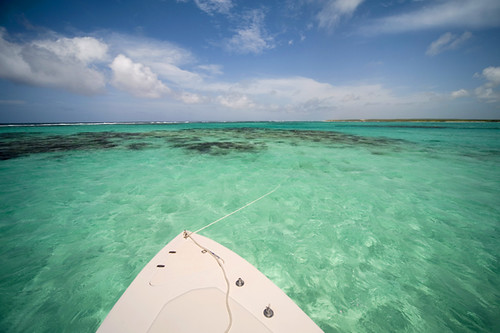 Once we had finished snorkeling and finished lunch while at anchor as seen above, we slowly cruised down the coast inside the barrier reef fishing and spotting rays and turtles. It was a lovely cruise.
 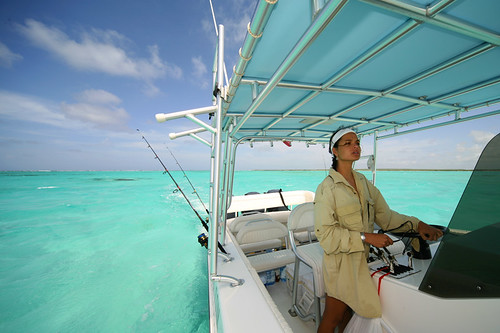 Up ahead we could see the other boat pulling two of their divers who were looking for conch.
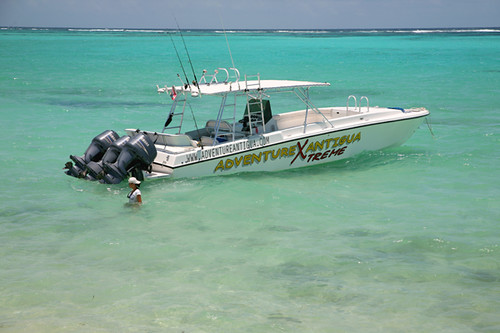
 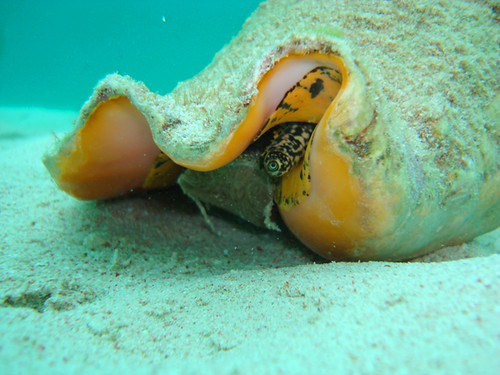 I had seen some nice ones when were in the water earlier and had thought about keeping one for an appetizer. These guys were taking some for their dinner. Steve Mendes makes lovely meals with conch and later we couldn’t possible turn down the dinner invitation with that in mind. Before sunset, we all rafted up together with Steve’s “Megalops” on the left side, Dad’s “Blue Rapid”, in the middle and Xtreme on the right. We were in a good anchorage outside the entrance to Barbuda’s wonderful lagoon, and after most of the guys went off fishing, Mykl and I decided to go on a kayaking mission into the “creek mouth” as it is known. The mangrove habitat there is like none other in the Eastern Caribbean and it was lovely paddling through this wondrous habitat. If you have ever been on our eco tour then you will know what this area looks like. The mangrove narrows at Guiana Island look very similar. I took this photo in the "creek mouth" on another camping trip i did with my uncle Nick and Dr Charles.
 We got back just before it got dark and just in time for a massive and deliciously tasty conch pasta. It was our last night in Barbuda and the calm gentle conditions that had been forecast never materialized. It looked like it would be a rough ride back home the next day. Will talk about that tomorrow. As a side note…..if you are here on island or coming here this week keep checking
 All forecasts described nice calm weather which would mean a nice anchorage inside the reef on the windward side.
 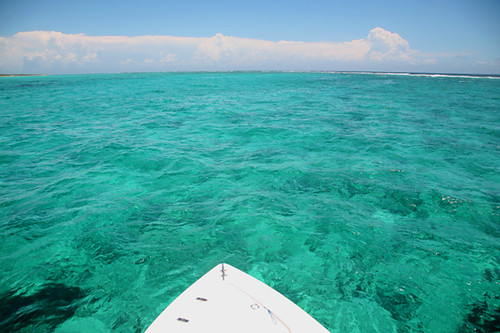 IT would be a perfect for beachcombing, fishing, snorkeling and exploring, and all looked like things would be perfect that morning. Once we arrived at the best spot for anchoring just off the beach I decided to set two anchors instead of just one.
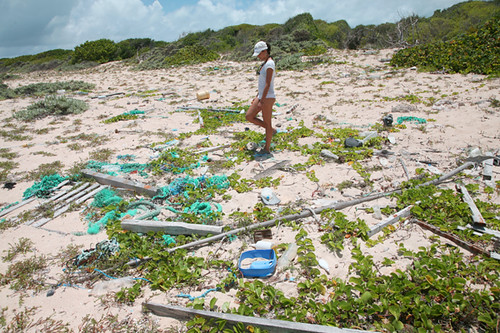
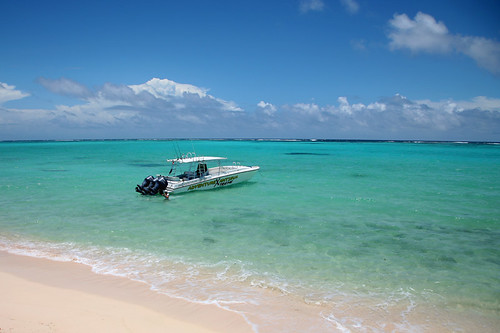 After all, we planned on going for a long walk along the deserted beach and wanted to leave the boat safe by itself. Walks on these windward facing deserted beaches are always very enjoyable to me for a number of reasons. Obviously having a beach to oneself is great wherever you are, but the interesting things you see make for a great long walk.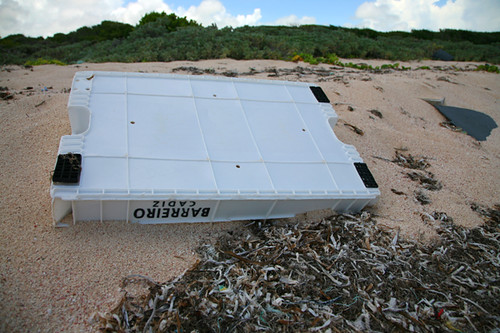
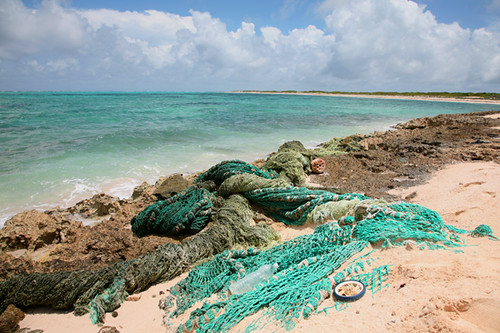 Garbage on the beach can be very interesting if you know or try to know how it got there.
 After a good 90 minutes or so we decided to stop for some lunch which we had packed.
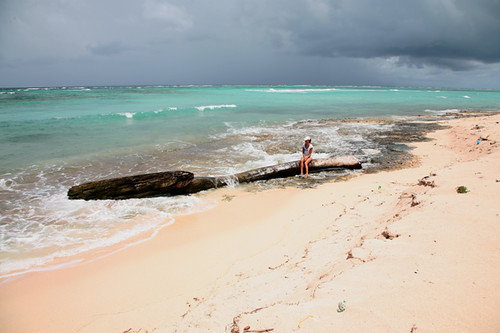 We sat on a huge log that had recently drifted up and it was then that we noticed a massive squall quickly approaching. Summer squalls are frequent in August and usually don’t last long. They approach quickly raising the winds up above 25 knots usually. Once the incredibly heavy rains have chased everyone off the beach the squall passes on leaving lovely sunshine and calm winds in its wake.
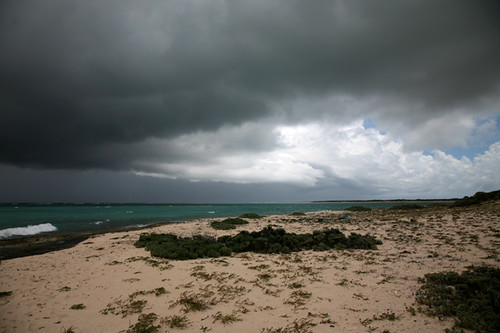 We decided to start walking back to the boat after seeing how massive this squall appeared to be. We were going to be in for a strong one and as the winds started to howl I began to worry about my camera….and more importantly the boat 90 minutes away.
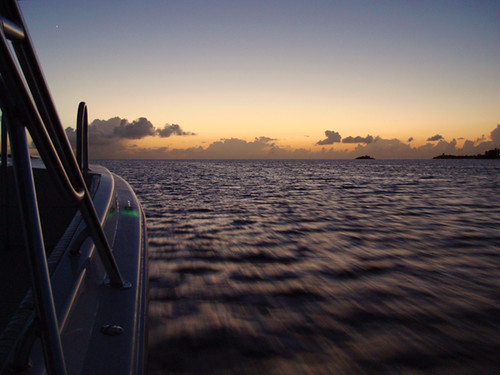
 On the way we passed Ffreys Bay where there was having a massive concert for Carnival, but that didn't take us away from the sunset.
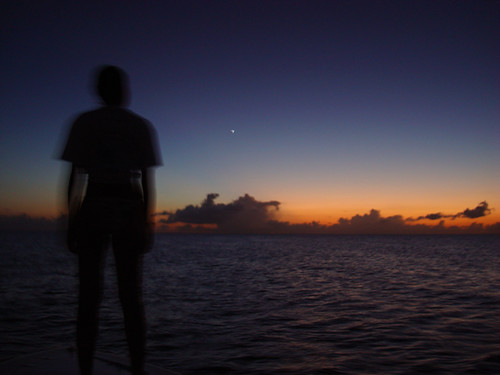 Apart from the lights at Hermitage Hotel, we were alone in Five Islands Harbour and the moonlight was dazzling. In fact it was so bright that we could see the many Moon Jellyfish in the waters below. Depending on the currents and bays, moon jellyfish congregate in large numbers at this time of year and we had found one of those spots. A bit of midnight skinny dipping would have been a big mistake and a real pain in the ass.
 Anyway, the grilled red and yellow peppers with baked potatoes went down beautifully with some medium rare rib eye steaks. Sitting up on the bow with our meal and the moonlight it was hard to imagine a better place to be in the world.
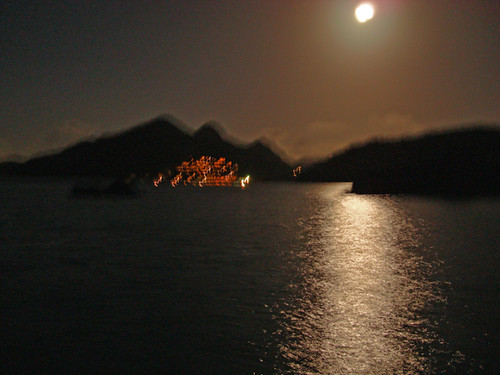 The faint booming from the St. Johns sound systems didn’t persuade me that I was missing out. The early morning tea before the eco boat passed us on its way to Hermitage bay was awesome too. The thing works!
 Let’s hope that the weather in the Atlantic behaves itself for both carnival revelers and campers alike though.
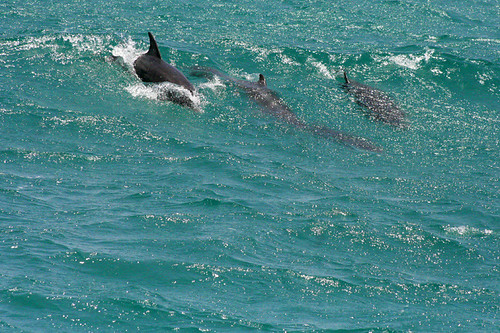 and even schools of flying fish, but in the end we returned home without success. IT was awful and losing Inigo Ross who was the co-founder of Wadadli Cats was a huge blow to me and the island. He was a hero to many.
 Up until now, I don’t have the story but obviously something went very wrong for them to end up in Saba over four days after they left port. I am so happy that this story had a happy ending. I don’t need to say what lessons should have been learned here as it’s pretty obvious from the facts above. This was a near disaster and I think there needs to be a day when all boats going off-shore are required to carry EPIRBS. I don’t leave home without mine.
 This prehistoric creature only comes up onto the beach once every few years after it reaches maturity will not be returning again. Only female turtles come ashore and they can only nest on beaches. To get to maturity and to this beach, she's had to pass almost insurmountable odds and it’s just so sad that one person has put a stop to it all.
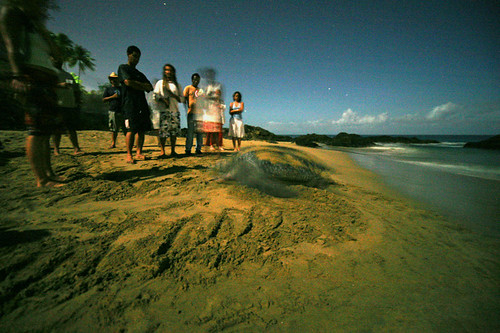 Depending on which study you read and where the study was conducted you may see that only 1 in 3000 or as bad as 1 in 10000 eggs reach maturity. She may never have an offspring that is able to nest. Maturity in general is somewhere between 20 and 40 years depending on many different factors.
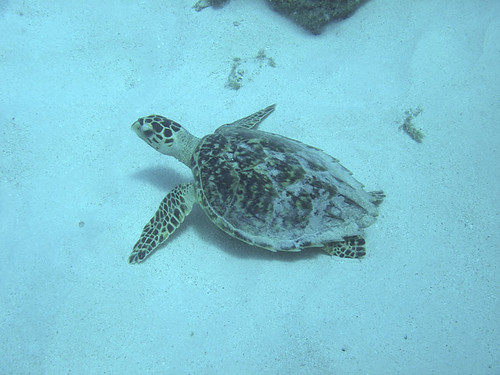 Of course it is totally illegal to kill these endangered animals or even to touch their eggs but unfortunately there are still a few people here doing the damage. There are millions of factors which do harm to the turtles, and in Antigua poachers are not the biggest problem. The worst problem is that our people don’t understand how all the factors come together to wipe out our important indigenous animals and plants. These animals were here before us and unfortunately will be wiped out very quickly unless change is made. Creating awareness of the issues and problems as well as the positive things will help. Studies like this one will end up being a very important tool in the fight to protect the ever disappearing habitat too. After all it is habitat destruction which is more of a problem here in Antigua than poachers. Key nesting beaches are on the move towards development and great care needs to be taken when making the plans. Anyway, for now this is a great push to gain info and to educate our island about the sea turtles that were here long before the ancient amerindians lived here. Keep an eye open for crawls while you are here on the island or on a boat trip. Call the turtle hotline on (+1 268) 773 8448 and leave a message if you see a nesting or someone troubling a nest. As with most things to do with "saving the environment" EACH OF US CAN MAKE A DIFFERENCE.