My team takes guests by boat on sightseeing and snorkeling excursions around our island's coastline. We have been doing it as a business each week since 1999 and for fun for much longer than that. My brothers and cousins grew up often spending more time on boats and on the sea than we did on land and the changes we have seen have been dramatic. The reefs which were vast fertile forests of corals are now ruins which look like messy piles of stones and rocks with scattered bits of soft corals and the rare piece of hard coral. It's difficult to explain to people what it looked like before the big die offs in the 90s, and it's probably better that they didn't know what it was like. It was a real magical wonderland and now there are only a few places on the planet that look like what it did all those years ago. Intricately linked with Climate Change and the health of coral reefs is fishing and in our case unmanaged fishing. Herbivore species of fish like parrot fish (chub), surgeon fish (doctor fish) and others help keep reefs healthy by feeding on algae which grows on dead corals while producing huge amount of sand in the process. Corals need sunlight to survive and when algae covers reefs they quickly perish. Climate change factors like stronger hurricanes, coral bleaching, ocean acidification as well as other stressors for corals are mitigated when there is a healthy population of herbivore fish preventing algae from taking over the live corals left on the reefs. Unfortunately, some of the species most often targeted by inshore fishers are these same reef cleaning species. There are some islands nearby that have Marine Protected Areas teaming with fish and have coral reefs which appear more healthy than our own. The main difference is that these particular areas are carefully managed with enforced fishing regulations. Sadly for a number of reasons our MPA sites are not yet carefully managed. Our government's Fisheries Department has fought hard to protect these species in recent times with new regulations and even closed seasons for parrotfish, but with only a tiny budget to do the actual work on the water, they have had a difficult task. When we guide guests through our reefs we often get comments about the scarcity of fish seen and as hard as it is to hear their comments we know that it's true. A few years back I took some of my team to the Tobago Cays which is a MPA in St. Vincent and the Grenadines. As we pulled up to an anchorage we were met by wardens who gave us a warm welcome and provided us with info about the park. We were asked to pay a small fee and were encouraged to enjoy snorkeling. My team were blown away with how beautiful the reef was and especially with the large numbers of fish, lobster, turtles and conch we saw. Corals seemed healthy compared to anything we had back home and it was a joy to be there. That lesson of what a well managed Marine Protected Area could look like stuck with my team and the example is seen over and over around the world where special areas are well looked after. Climate Change is a reality we can't avoid but looking after our reefs significantly lowers the impact of climate change on them and by extension on us all.
This is a blog set up by Eli Fuller (me) to help keep readers informed and to promote our little country to prospective guests. It's also to make sure that new info about our island is passed on quickly and also to receive feedback on this info. Of course most of the things i write about have themes of ecology and usually have quite a bit to do with my company Adventure Antigua. Make comments anytime you want, but check the site above to book your adventure.
Friday, October 09, 2015
Mitigating Climate Change in Antigua and Barbuda
My team takes guests by boat on sightseeing and snorkeling excursions around our island's coastline. We have been doing it as a business each week since 1999 and for fun for much longer than that. My brothers and cousins grew up often spending more time on boats and on the sea than we did on land and the changes we have seen have been dramatic. The reefs which were vast fertile forests of corals are now ruins which look like messy piles of stones and rocks with scattered bits of soft corals and the rare piece of hard coral. It's difficult to explain to people what it looked like before the big die offs in the 90s, and it's probably better that they didn't know what it was like. It was a real magical wonderland and now there are only a few places on the planet that look like what it did all those years ago. Intricately linked with Climate Change and the health of coral reefs is fishing and in our case unmanaged fishing. Herbivore species of fish like parrot fish (chub), surgeon fish (doctor fish) and others help keep reefs healthy by feeding on algae which grows on dead corals while producing huge amount of sand in the process. Corals need sunlight to survive and when algae covers reefs they quickly perish. Climate change factors like stronger hurricanes, coral bleaching, ocean acidification as well as other stressors for corals are mitigated when there is a healthy population of herbivore fish preventing algae from taking over the live corals left on the reefs. Unfortunately, some of the species most often targeted by inshore fishers are these same reef cleaning species. There are some islands nearby that have Marine Protected Areas teaming with fish and have coral reefs which appear more healthy than our own. The main difference is that these particular areas are carefully managed with enforced fishing regulations. Sadly for a number of reasons our MPA sites are not yet carefully managed. Our government's Fisheries Department has fought hard to protect these species in recent times with new regulations and even closed seasons for parrotfish, but with only a tiny budget to do the actual work on the water, they have had a difficult task. When we guide guests through our reefs we often get comments about the scarcity of fish seen and as hard as it is to hear their comments we know that it's true. A few years back I took some of my team to the Tobago Cays which is a MPA in St. Vincent and the Grenadines. As we pulled up to an anchorage we were met by wardens who gave us a warm welcome and provided us with info about the park. We were asked to pay a small fee and were encouraged to enjoy snorkeling. My team were blown away with how beautiful the reef was and especially with the large numbers of fish, lobster, turtles and conch we saw. Corals seemed healthy compared to anything we had back home and it was a joy to be there. That lesson of what a well managed Marine Protected Area could look like stuck with my team and the example is seen over and over around the world where special areas are well looked after. Climate Change is a reality we can't avoid but looking after our reefs significantly lowers the impact of climate change on them and by extension on us all.
Friday, November 07, 2014
Lionfish hunt 16 November 2014
Hi there. Next Sunday the 16th November, Mamora Bay Divers and Adventure Antigua will be hosting another Lionfish Hunt. As usual teams of up to 6 people will compete to catch the most lionfish. Scuba or snorkel equipment is permitted and pole spears or Hawaiian slings can be used to catch the fish. If you would like to use a spear gun you must have a license from Fisheries but the same license is not required for the slings and pole spears in this particular event. The winning boat with the most fish will win $3000. There will be cash prizes for 2nd and 3rd also. This week we will be looking for more prizes for other categories too. Your teams can fish from boats or from shore. For more info and also to register your team please call Linda at Mamora Bay Divers on +1 268-764-4905.
Aquasports in st John's still has slings available. Fish caught in the event will be served once again outside Skulduggery on the Antigua Yacht Club Marina dock. It's going to be another super fun day on the water and a nice family lime after. Take part and know you're doing good for our reefs. Please share this on Facebook or with your contacts on whatsapp. If you'd like to help in some way please contact Linda. Thanks much. Eli
Saturday, September 20, 2014
Are beaches really important to A&B?
As is the case with so many crucially important things in life, "attention" is the thing lacking and unfortunately while beaches are getting smaller and smaller Antigua and Barbuda as a nation isn't taking notice.
I suppose before we can deal with the problem or even before we can identify a problem, we need to understand what a beach is, how it came to be and most importantly, how it is sustained in it's natural environment.
When we speak about beaches, we are speaking about bays, coves or shorelines that have a sandy buffer between the sea and the land. Sand is made up of different materials depending on where in the world you find it. In many areas in North America the sand is made up of silica or silicon dioxide which essentially comes from eroded quartz rock. Here in Antigua and Barbuda and most of the Caribbean the sand has a different makeup. Primarily sand here is made up of eroded or crushed up corals and shells which really are made from calcium carbonate. This is why islands like Barbuda that have more reefs usually have more beaches and islands like Redonda that have no off shore or barrier reefs have no sandy beaches. So if you think about it, there is an essential and direct correlation between a healthy reef system and a healthy beach system. Of course we are speaking about how these things naturally occur. For example, one could build some stone groynes to make a cove over on Redonda and barge in mined sand from Barbuda to fill it with. Presto! You have a nice sandy beach on an island that never had one. That is done around the Caribbean and quite a bit on Long Island (Jumby Bay).
I guess we could spend plenty of time speaking about what healthy reefs look like and to be honest, most people don't remember or have never seen a healthy reef. Reefs in the Caribbean haven't been "healthy" since the late 1980s. Since then scientists have reported unprecedented degradation and die offs. For the purpose of this little article I will quickly and basically explain about how healthy reefs produce sand. A reef is made up of millions and millions of organisms and the main coral structures are made from calcium carbonate. These structures, when alive, are often challenged by different types of algae (a type of moss) that attempt to grow on them. If algae is permitted to grow over the coral stuctures then the life sustaining sunlight is blocked from the coral polyps. Polyps are living organisms which often produce the limestone structures we call corals. They need light to survive and when algae manages to grow over them, they perish. For millions of years polyps have had the upper hand thanks to a symbiotic relationship with herbivore grazers like parrotfish (chub fish), surgeon fish and other marine species including urchins. Those critically important parrotfish feed on the algae keeping the reef alive, but the magic is what happens as a result. When parrotfish chew algae from a section of coral they usually bite of bits of dead coral. Most of the time they ingest it and pass it through their systems as they digest the algae. What comes out is magical "white gold" or sand. Some of the most important poo in the world in fact! That poo as I mentioned contains the sand which is essentially responsible for about 60% of our GDP. I know that is kinda far fetched for most people who are probably laughing and shaking their heads right now, but do some reading on what parrotfish do. According to scientists, one adult parrotfish can produce 90 kilos of sand a year while keeping the reefs clean from algae. A healthy reef is covered in parrotfish and other algae eating animals which for millions of years not only sustained the reefs but produced millions of tonnes of sand. Take them away from the reef and anyone can deduce what happens next. However, you would have needed to be paying attention to have noticed all these crucially important relationships. We here in Antigua and Barbuda were not paying attention. In fact, the biggest seafood export out of Antigua and Barbuda over the past five years has been parrotfish. It has probably been our biggest export. Thousands of pounds a week of netted parrotfish were brought ashore to be sold both here and shipped abroad to our French neighbors. Pause and think about that for a moment. We rely on healthy beaches which rely on healthy reefs which rely on healthy populations of parrotfish and other herbivore species, but we are wiping the reefs clean of the parrotfish.
I remember being on a radio show with Chief Environmental Officer, Dianne Black Lane a few years ago and she remarking that the most important wild life form we have in our country is the parrotfish and one that needed to be protected more than any other. Sadly, the Environment Division she heads has no more legislative powers than the parrotfish themselves.
Coupled with out of control reef fishing, the reefs have also had to face several incredibly strong hurricanes in the 1990s. Scientists showed that reefs hit by hurricanes within carefully managed marine parks were able to "bounce back" to a point where healthy coral regrowth occurred. Of course, reefs that had poor management and where heavy fishing still took place struggled to stay alive, and in example after example the corals died out completely.
This brings me to another key factor that helps keep beaches healthy. Of course, we've already spoken about how the sand is created and how that process keeps reefs healthy, but by extension, healthy reefs often form an essential barrier or buffer from the Atlantic Ocean's waves and surges. We have seen areas of reef that boats couldn't navigate through because of depth issues become so degraded that they are now safely navigable. Kettle Bottom Shoal on Antigua's north coast is a great example of that. With the reef now deeper than it was back in the 80s we are seeing more surge and more wave action getting to beaches like Dutchmans Bay and Jabbawock. Climate Change effects like rising sea levels are not helping either! With more wave action there is often more erosion on beaches. Unfortunately these beaches are not being sustained with new fresh sand like they have been historically because of the depletion of parrotfish and other herbivore fish.
That isn't the end of the story because as if beaches didn't have enough to worry about, they have their biggest assault on the land side. Beach sand has been used when making concrete for generations and with more and more homes being built from concrete and fewer from wood, it appears to me that there is more and more removal of sand from beaches. There are few beaches in Antigua that are safe from sand mining and those that have easy access from the road are more susceptible to the problem. There is a common misconception that it is perfectly legal to remove a bucket or two from the beach. I am not sure how this terribly damaging concept came about, but many popular beaches have buckets of sand removed daily from them. I started a mobile kitesurfing school on Jabbawock beach in 2001 and we have seen this first hand since then. Thousands and thousands of bucket loads are taken from this beach and the same happens around the island. Often times there is more taken than a bucket or two at a time removed. If you take a slow walk along Jabbawock Beach you will see the trenches and holes where sand is scraped up into containers almost daily. It is beyond me how people think this wont have a negative affect on the beach.... our most important asset.
Yesterday I received calls about a misguided citizen who decided that he would do what he described as a community service down at Jabbawock beach. The beach has been receiving plenty of Atlantic sargasso seaweed recently and as an excavator owner he took it upon himself to ignore the massive sign about nesting sea turtles, about not driving on the beach or removing sand. He had two of his massive excavators go on to the beach and clear the live shoreline vegetation up to twenty meters from the high water mark up and down a 300 meter secton of beach. The scaevola, green button mangrove, sea grape, grasses and other vegetation not only provide crucial nesting cover for critically endangered sea turtles and other coastal marine species including migratory birds, but they also help prevent erosion by holding sand together in their root systems and foliage. In many countries it is illegal to touch coastal vegetation with stiff fines for even walking on sand dune vegetation. Yesterday all of this was destroyed and leveled on the South end of Jabbawock. The excavators operated under the cover of darkness and clumsily cleared small trees and habitat up and down the beach. They stopped in the morning. Several concerned citizens including myself contacted the various authorities in an attempt to make sure the excavators were moved from the beach and that work would be stopped. I was interviewed by Observer Radio about the situation before lunch explaining what was going down and further explaining that the 1980s environmental legislation isn't strong enough to deal with situations like this. The Environmental Management Bill, drafted by government technicians after help from international consultants and consultations with stakeholders, has been finished and has been sitting on various ministers desks for years and years. The government's inaction to get this bill signed into law is indirectly causing huge environmental damage daily on this little twin island state. One can only ponder why they have not gotten in passed into law. Anyway, despite this interview and all the calls to the relevant authorities, the man doing the excavation work called into a local radio talk show to explain himself. According to him he was "cleaning the seaweed" from the shore where he and many other swim. At 2 pm he continued to say he was returning to the beach to do more work. By the time we got back to the beach, he was at it again tearing up wonderfully healthy beach vegetation and leveling the beach by removing the dunes.
How could all of the various government agencies including the police know of the situation and not do anything to stop further destruction. It really showed just how flawed our system is and how little we actually care for the health of our beaches. We here in Antigua and Barbuda seem to have our heads in the sand figuratively while literally the sand vanishes daily. Apart from paying more attention to our most important natural resource, we need the Environmental Managment Bill signed into law immediately before it's just too late.
Eli Fuller
President of Antigua Conservation Society
Managing director of Adenture Antigua
Thursday, February 27, 2014
With the utmost respect, the Sir Viv commercial doesn't do it for me.
I kinda get what they were trying to do but I'm a 41 year old Antiguan who's never seen Sir Viv play cricket. I know about him and to me his incredible feats are accomplishments I learned about from essentially historical accounts. He's one of our greatest sportsmen for sure, but many here and across the Caribbean don't really relate and for sure hardly any potential visitors from the US have ever heard of him. The golf angle is totally weird and I feel that it's seriously time we market tourism and especially the segment many here are overly obsessed with, Sport Tourism, using younger more dynamic characters. If we are going to use a "star" to market our tourism or sport tourism, then I think we need a rethink. Antigua's America's Cup winner, Shannon Falcone or Antigua's international Kitesurfing sensation, Andre Phillip would be a thousand times more appealing showing off Antigua in my opinion. I mean, think about sailing and how many come to Antigua because of it? Imagine how much trickle down happens in this economy because of sailing. Compare that to golf or even cricket. We really need to examine these sectors carefully and do some very good market research in the future if we want to be competitive. I mean if we had direct flights from India then I would say lets push this all the way, but for now our markets are not all cricket hotspots. Our successful competitors who were cutting cane a few year ago have done the research.
It's time to think outside the box!
Thursday, October 17, 2013
Why I'm being slandered by two tourism powerhouses.
Excursion operators like myself that take guests from ships independently through the use of our own websites or through independent travel agents, are not held in very high esteem by cruise ship executives or their local agents. The main reason for this is that the ships and their local agents profit extremely well from having exclusive contracts with excursion operators where cruise passengers are booked on board the ships to go on their contracted excursions. Usually these are referred to as "ship excursions".
It has often bothered me that I am not part of the cruise association here locally while taking many cruise ship passengers on my excursions. Having no say in an industry that I somewhat rely upon seems like bad business to me. Many excursion companies have started long after my company and have contracts with ships and attend the annual Florida Caribbean Cruise Association conventions. This year I made the decision to attend one of these FCCA meetings to get a better understanding of how the entire system works and also to decide for myself if it was good for my company to be contracted directly by ship lines. As it happened I was also persuaded earlier in the year to join forces with the Barbuda Council in an effort to attract ships to the shores of our financially troubled sister island. I am spokesperson for a company called Denco which is contracted to represent the Barbuda Council on all cruise ship dealings. I'll talk more specifically about that on another blog post.
Anyway, when you pay your US$900 to attend this convention you are given a clear itinerary of the different talks and seminars that will be given, and also a list of special "one on one meetings" with pertinent cruise executives.
Six weeks before my departure I wrote a letter to Patrick Ryan of Brysons shipping, the main cruise ship agent here in Antigua asking for a meeting to discuss our Barbuda plans. I never got a reply.
I didn't write to Nathan Dundas, the chairman of the Antigua Cruise Tourism Association, and one of Brysons top executives because I knew he wouldn't reply to me. You see, in 2003 I was chairman of the Antigua Barbuda Excursion Alliance, and I caused great embarrassment to Mr Dundas by exposing what appeared to be a fraud he was orchestrating. It was a very sticky situation where all the boat excursion operators were notified via an announcement in The Daily Observer of a meeting at the ministry of tourism the following day where there would be a discussion on licensing of captains. The next day about thirty excursion operators met at the ministry and were briefed by the then Junior Minister of Tourism, Hilson Baptist. He told us that Mr Dundas, who was standing next to him, was the main agent for the cruise lines that visited Antigua and that he had been contacted by these lines on a very serious matter. According to the Minister, the cruise lines had told Dundas that if the excursion operators didn't have licenses for their captains by the end of the year that they would stop coming to Antigua. He told us that Mr Dundas has located a new company in English Harbour that would be providing the training and testing for these licenses. He then introduced Mr Dundas who pretty much said the same thing.
The day before someone had notified me that this was going to transpire and I had made a few calls. I was told that Mr Dundas was a major shareholder of this new company which would be handling the licenses. Anyway, when Dundas finished telling us about the costs of instruction and time our captains would need to be off work, it was time for questions. I got to ask the first one. "Mr Dundas, I understand that you are a shareholder in this new wonderful company. Could you tell us if this information is correct?"
For a second, the room was silent and then he spat out a reply that essentially ended that days meeting in chaos. "THAT'S NONE OF YOUR BUSINESS". He practically screamed those words at me. The meeting ended with even the minister shaking his head and walking off. I haven't had much dealings with Dundas since then apart from appearing on a tourism panel talk on Observer Radio.
Four top cruise ship executives gave presentations on how their particular company decided upon a particular itinerary and upon particular ports. This photo shows one of the sides which was shown and refereed to throughout the presentations.
After they had all given their presentations there was a question and answer session and many people asked questions of the panel. The Minister of Tourism from Grenada and also The Minster of Tourism from Dominica asked questions. The Tourism Minister of Grenada asked questions, Excursion operators asked questions, port managers asked questions, agents did as well. Each time someone asked a question they introduced themselves and mentioned where they were from and what company they were involved with. I was intrigued and worried with what they had said about dropping ports and decided to ask a question. I introduced myself and said I was from Antigua. I said that I came to this convention to see if I could negotiate excursion contacts after working as an independent excursion operator for 13 years. I said that after graduating from university, I worked in the duty free shopping center at the cruise port and heard about certain problems the ships and their guests faced. When I started my company years later, those problems still persisted and today those same issues were still there. Joanne nodded her head in agreement. I said that considering what they had mentioned a short while earlier about dropping ports that didn't fix problems I wanted to know if they ever considered another tactic that could help ports like ours solve their long standing issues. I said that despite obviously telling our island's cruise representatives about these issues they remained fixed. I asked them if they thought that it would help if they were interviewed by our local media so that people back home could actually hear from the horses mouth what the ships loved and what problems they experienced. I said that possibly coming from them a greater impact could be made back home. The CEO of one of the lines answered by saying something very simple. He said, "Mr. Fuller, our job is the ship and your job is the island". That was good enough for me and I didn't need any further explanation. It was that clear. There are more and more ports coming online each year and more and more money being spent on existing ports. The cruise lines have more choice and making a decision to stop visiting a port isn't as difficult as some would want to believe.
Remember Colin James is a government worker who's paid by our tax dollars. Anyway, he says to me that someone told "them" that there was a person from Antigua in a seminar saying that they (He and Nathan) had no credibility back home in Antigua. I immediately said that I was the only person at this seminar from Antigua that had asked questions and so obviously they were speaking about me. I did say that the person misrepresented me and that he, Colin, should have been there to have heard exactly what I said. I told him that I didn't say that they had no credibility in Antigua. He was clearly upset and told me that I shouldn't have mentioned "Antigua". He suggested that I was damaging Antigua's reputation. I reiterated that he should have been there and that he's got this all wrong thanks to bad info that was brought to him. He was clearly upset, and I told him that he shouldn't be so sensitive to what people say. I also asked why he was getting so upset at the things I did say since I was trying to find a solution to chronic problems that threatened our cruise tourism industry. I asked him if it was a state secret that we had issues at our port? I asked him if the ships were in the dark about taxi issues or dredging problems?
Nathan then jumps in saying that I simply shouldn't have spoken about Antigua. I reminded them that each person asking question was asked to say where they were from. He angrily snapped back at me saying that I shouldn't have asked any questions. Here we were, ambassadors of Antigua and Barbuda inside the Cartagena Convention Center clearly having a argument. There were executives there from all the major cruise lines as well as 600+ other industry folk from the Caribbean and around the world walking by us. I was astonished at this coordinated attack from Nathan and Colin, not so much that it was happening but that they chose to have a confrontation in front of all these people. The message that sent was awful and I was very cognizant of that. Remember I have been representing Antigua and Barbuda internationally in sporting events since I was 12 years old, and I know how to carry myself abroad. It was incredibly disappointing to me to be involved in this conflict. I said to Nathan that he had received incorrect information and that he should have been there. This enraged him even more and he shouted at me saying that he'd been in this industry for "twenty seven years" and that he didn't need to attend every little seminar that was offered. (The Ministers of our neighboring islands felt that the seminar was important enough to attend though.) He exclaimed that he had taken Antigua's cruise arrivals from nothing all the way above 700 ships. He yelled at me asking what had I ever done for Antigua? "You're not even an authorized tour operator"!! He screamed. I was so dumfounded that I didn't know how to reply. I asked him what he was speaking about and told him to settle down. He then told me to just get away from there. Again I was surprised and asked him if we wanted to "run" me from this place. "YES! I want to run you!! Nathan Dundas said it several times. "I want to run you. That's exactly what I want." I lost a little of my composure at that point and quietly asked him where he planned to run me. I asked him if he wanted to run me to Guyana. That was a very rude thing for me to have said because of course, he's originally from Guyana, and I said it to upset him. If you're reading this Nathan, I apologize for that. The next thing I told you was that you were a joker. I am not sorry for that!!
In fact, I didn't get a chance to tell the same to Collin James, but because of what transpired during that exchange and overall at the FCCA Conference, I have to say that I think he is also incredibly unprofessional. It's one thing for Nathan Dundas to be unprofessional because he's just an independent business man (despite getting his entrance fee and possibly other expenses provided by the Ministry of Tourism), but Colin James works for the people of Antigua and Barbuda. I am astonished that in this day we have someone like him working for our tax dollars and behaving in the way he did.
I had a chance to sit down for a private lunch with The Minister of Tourism from Dominica the next day, and he was also astonished to hear about what had transpired. He had heard clearly my question during the seminar and thought that there was nothing at all wrong with what I had asked. In fact, I was approached by quite a few other people over the next few days who heard my question and thought it was a good one which provoked a very good and telling answer from the lines. They were also surprised to hear that I had had received harsh criticism from my fellow Antiguan delegates.
Within no time, the word was being spread to Antiguans at the conference in Cartagena and to people back in Antigua that Eli Fuller was "slandering Antigua", "airing our dirty laundry", and "damaging our country's name". Weeks later people on the street here in Antigua are telling my friends that I was hurting Antigua's reputation at the FCCA conference in Colombia. Gentlemen outside of the RBBT bank were overheard saying this nonsense just yesterday.
Exclaiming in public at an FCCA conference that I am an unauthorized tour operator and then telling people far and wide that I was damaging Antigua's reputation at the conference is hurtful and damages my reputation. I have spent all of my adult life promoting Antigua and Barbuda. I don't need any pat on my back for the work I do to promote this country but I also don't need to have people slandering me. I don't think there is a person alive that has put more positive Antigua content on the web. Try running through a list of the results after a google search for Eli Fuller Antigua or even better have a look though some of the content I have put online over the years.
Here are a few of my online accounts:
https://twitter.com/antigua
http://www.flickr.com/photos/antiguan/
http://antiguaisland.blogspot.com/
http://instagram.com/antiguan
I own and help moderate www.antiguaforums.com on behalf of The Ministry of Tourism, because our Tourism Ministry couldn't afford to have their own message board and relied on an old unmoderated forum that internet trolls had taken over. Thankfully we had that one which was tarnishing our country's name taken down. I have been one of only a handful of people actually in Antigua actively writing on the official Ministry of Tourism message boards since 1999.
I also am active on Tripadvisor's local message board posting in the old days as 365 and more recently as antiguaadventures
I have been one of the only local contributors on the main cruise forum Cruise Critic since 2004. You need to register to see the things I have written on there to help promote Antigua and also to help with damage control. I posted under the name "Antiguan" which you can search for.
I have provided photography for many international and local tourism related magazines.
I have also written countless articles about Antigua and Barbuda for international publications in an effort to promote this beautiful and unique destination.
I also have been featured and interviewed in countless articles about Antigua and also in many pieces for international TV always with the sole purpose of promoting our country as a unique destination.
For these guys to be telling people that I was tarnishing our country's image is asinine and speaks volumes to their characters and professionalism. Neither of them heard me speak and got second hand info from someone who didn't represent what I said correctly. I will continue to promote Antigua and possibly will start taking a more active roll in Antigua and Barbuda's cruise tourim's future.
Wednesday, May 29, 2013
An alternative to Sand Mining in Barbuda.
Barbuda is one of the most beautiful islands in the Caribbean with dazzling white sand beaches stretching around most of it's deserted coastline. Approximately half of the coast is protected by barrier reef, and it's this reef which has helped to produce most of the island's wonderful sand. For millions of years parrot fish have chewed algae from coral which they easily digest. The bit's of chewed coral which are not digested are excreted as sand onto the sea floor. This essential process for Caribbean white sand production has made Barbuda one of the most attractive beach destinations in the region. One of the island's beaches is about the longest in the Caribbean, and at different times of the year tiny pink shells wash up on the shore turning the beach pink. There's nothing quite like it to be honest.
With all of this in mind it's hard to accept that commercial mining of this amazing sand has gone on without noticeable regulation for decades. It's to the point now that serious environmental issues are threatening the island's water supply and more critically the integrity of the coastline. We are starting to see erosion on some areas of shoreline closest to the mining. Some environmentalists think that the damage being done is so severe that it would take hundreds if not thousands of years for it to be corrected. Coupled with that has been a huge increase in the amount of parrot fish caught for export to Guadeloupe. Neither practice sustainable in any way and equally destructive for the beaches.
It would seem that mining the very thing that makes the island a sought after destination would be a bad decision, but the decision makers can't seem to find an alternative income generator. I can see why this has been difficult. Tourism in Barbuda has always lagged behind Antigua mainly because of transportation.
Without a large airport, there simply has never been enough seats coming to Barbuda to fill guest houses and hotels in any meaningful way. Tourism and all of the fun things that go along with tourism like sport fishing for example, have had it tough forcing the government to keep the mining of sand going. This could all change in the near future if decision makers are brave enough to entertain alternative business plans.
One of several changes that could happen has to do with Cruise Tourism. Many of the ships visiting some of the Caribbean's most celebrated destinations anchor off shore and tender their guests to little docks on the main land. Without any significant investment this could happen in Barbuda almost immediately. One or two small ships a week could provide significantly more employment than the entire mining industry does in Barbuda. In addition to that, the types of jobs generated would be ideal for Barbuda's residents who would be able to conduct both light tackle and off shore fishing opportunities. Barbuda has all of the top game fish species endemic to it's coastline and interior lagoon. Species like bonefish, tarpon, permit, barracuda, jacks, mackerel, wahoo, dolphin fish, tuna, marlin, sailfish and many others are not difficult to find for Barbuda's experienced fishers. Of course there is great diving, snorkeling and bird watching too. The island is a nature lovers dream come true, and there is no end to the excursion activities that could be designed to make cruise passengers happy. From an environemtal point of view, cruise tourism as an alternative to commercial sand mining is a no brainer. Limited capital investment would be needed to get a foot in the door and with all visitors coming to the island by tender there would be very little waste of any sort left by ships. They would not leave anything on the island except footprints and money. The potential to make Barbuda the main sport fishing destination in the eastern Caribbean is there and just waiting for the first ship to drop anchor. Until that happens white sand is still being exported to Antigua and other destinations to be irrationally used in construction.
Tuesday, April 09, 2013
Clearing a few things up on the new Fisheries Regulations.
There have been several very loud people in the media who have been suggesting that I (Eli Fuller) helped create these new regulations to suit my own agenda. This is hilarious for several reasons. First of all, I never attended any of the first consultations which ended up creating the first unsigned draft regulations of 2004. Then when our Minister called for a fresh round of consultations on the Fisheries Act and the draft regulations I did not attend these either. In fact, I have never had any meetings with any minister or any Fisheries officer or any other government representative to discuss anything within the new 2013 Fisheries Regulations. It's a complete mistake for fishermen around Antigua and Barbuda to believe that I have had any input whatsoever on what the regulations are calling for.
That all being said, let me explain what I did do, and how I feel about the new regulations. What I did was complain like so many others that our fishery was being used in a way that was unsustainable. Fish stocks were being depleted and the apparent lack of management had plenty to do with many of the problems that fishers were facing out on the water and back here on land. It was a no brainer that we needed seasons for certain species and last spring when called by the media to comment on the fact that Chinese businessmen were buying all available lobster here and exporting them, I said that we needed new regulations to be signed. In May, I got tired of complaining and hearing complaints about all the issues to do with fishing and decided to do more. I got together with The Antigua Conservation Society and we started an aggressive petition to the PM asking him to intervene. We felt that whatever was in the unsigned draft regulations sitting on the Ministers desk needed to be signed and implemented. After all, it was developed with the input of fishers and their organisations. That's what Eli Fuller did! I called for all of us fishers to be guided by new rules and regulations so that our children and our children's children may be able to fish here in our waters some day in the future. Many said that we should leave it alone. "When it's done, it's done!" is what some said. I didn't think that was right and I am happy that I got involved to push for change.
Now I am being accused of creating fisheries regulations which hurt poor people and help me. Typical coming from men like James Tanny Rose I guess. Tanny (interesting article and comments) is a man who I have never met, but who has always astonished me. I don't know how he is permitted to be a beacon of hate on the call in radio stations. Using ethnic slurs to describe races of people here on the island and derogatory descriptions of others who are not as "picky head" as he says he is because they came from other shores just is disgusting, and the media should be ashamed of themselves in 2013 to permit people like him to get away with it. He filled the airwaves apparently with untruths about the new regulations and how they came about. Anyway, I hope that the next time someone like him starts bashing me on this issue using racist descriptions or not, there will be someone else who has the facts which are simply that I called for new regulations but had no input whatsoever on what are in them.
Clearly I feel that generally it's a good thing that we now have some rules on fishing in place out there on the ocean and here on land. I have not had a chance to read the 2013 fisheries regulations but I have registered as a fishermen. The first thing anyone noticed when they go and register is that being registered with Social Security, Medical Benefits, and the Education Levy department are prerequisites. This is a big shock to many fishers who have fished for years without ever paying into these schemes. Many had no idea that they were required to by law, and some fishers are furious that Fisheries is forcing them to sign. I think that it's a bit much really and obviously this policy is something coming from an another area within the Government. Maybe even the IMF were involved, but I doubt the Minister or the Chef Fisheries Officer had anything to do with that requirement (and neither did I). I guess it may be a good things though to be registered with Medical Benefits if you are a fisherman. It can be a dangerous job out there and having free medical after you register and pay your modest contributions is very beneficial. I am told that every fisherperson must be registered with Fisheries unless you are fishing off the beach or off the rocks.
There are other controversial things in the new regulations, and one which creates the most noise has to do with spear fishing. Up until Feb 1st this year spear fishing in Antigua and Barbuda was only legal if you had a special permit from the Chief fisheries officer and permits were not being given out. Now anyone can get a permit to spear fish legally. What is controversial is that there are limits to how many fish each fisher is permitted to catch. This is something I am hearing about and didn't have any input at all in the regulations other than to publicly say in the past that spear fishing should be legal as long as it's not done in marine protected areas. I don't think it's a bad thing though.
If you spend the time to search for spearfishing vids on youtube you will see many people shooting large fish in deeper waters. There are hardly any vids of people shooting small fish for many reasons but most of all because good spearfishers want to go for big "choice fish" to maximise their productivity. Why take 6 hours to catch 20 lbs of tiny fish when you could spend one hour and catch three fish over 10 lbs? Check the videos for yourself. The problem here is that many fishermen rely on old techniques and would rather shoot fish on the shelf in the very shallow waters. Spearfishing in deep water for large fish would mean them having to re tool and learn new techniques. I know of several spearfishermen here in Antigua that are shooting big fish (without tanks) in deeper waters. Two big fish and they are done!
Although fishermen don't like to admit it, we have a big problem with our inshore fishery and reefs. Over fishing with all the various methods, worst of all netting, has caused this in conjunction with the hurricanes of the 90s. The government Fisheries department have put a limit on the numbers of fish spearfishers can catch in an effort to try and protect the reef ecosystems. I think we will see a huge increase in the number of spearfishers overall and probably an increase in the overall poundage of fish harvested in this method. It's legal now and unemployed people can go out and find some fish for their family. This legalising of spearfishing will help small scale fishers but the commercial spearfishers will need to learn new techniques. Swimming down to 50+ feet to shoot fish isn't as hard as many people would think and larger fish out beyond the reef make the regulated limit plausible.
Another controversial thing is seasons for certain species. These were so controversial that many have been deferred until 2014. Antigua and Barbuda will join all the islands nearby to finally have closed seasons for lobster and conch. Amazing and a positive thing for the environment and for fishers. Giving these highly targeted species some time to reproduce will ultimately give fishers more a more sustainable and stable catch. These regulations were not just pulled out of a hat. Regulations from around the region and much further afield which have worked well for fishers were taken into consideration along with the feedback and input from fishers both here and in Barbuda.
There are many things that I am sure we will find in the regulations which we can debate upon, but the reality is that we needed some rules here and this is a good starting point to help protect the marine environment and the fishing industry for generations to come. After visiting the main Fisheries office in town I can tell you that officers there are ready and willing to help you understand the regs. At the end of the day we are in a much better place than we were 12 months ago.
Monday, July 16, 2012
18 million US dollars of Government Dept in exchange for what coastal protection??
Here is a excerpt taken from The Antigua Observer:
Baptiste told the CARDI consultation that he was able to further reduce the debt to $18 million after talks in Rio in June with that country’s finance minister, Guido Mantega.Read more here. As you can see, it's not very specific to be honest. Caribarena.com wrote another piece today questioning what exactly this all meant:
“We were introduced to a climate change organisation (The Nature Conservancy) and we are getting involved in a debt for climate adaptation swap,” Minister Baptiste said.
“We will get the climate change people to pay off the $18 million for us while we get vigorously involved in coastal zone management in Antigua & Barbuda.”
However, when Caribarena.com contacted Senior Environment Officer Ruleta Camacho and her Chief Environment Officer Diann Black-Layne, neither could share any information on the $18 million initiative.
According to Wendy Tittle, Press Secretary for Minister Baptiste, too many details cannot be divulged about the proposed initiative at this time, as the ministry is “still waiting on some documents.”
Saturday, June 23, 2012
Dear Prime Minister Baldwin Spencer, you must take simple action to save our reefs!
- netted parrotfish by the thousands taken from the reefs
There are way too many areas of our coastal environment that are being neglected simply because there are no laws that can help them. The Chief Fisheries Officer is quoted time and time again as saying that her hands are tied until the regulations are signed. The person who need to sign it told me and others who were meeting him one day when he was Junior Minister of Tourism that he can't swim and has no interest at all going out on the water on any boat. This doesn't mean he isn't capable of understanding the issues here, but I can't help feel that he doesn't. Article after article is published like this one today featured in The Daily Observer: St. John’s Antigua- Having almost ravaged the fishing stock off Antigua, Barbuda-based marine biologist John Mussington says fishermen are now looking to employ their harmful practices on the sister isle. Their primary target: the parrot fish, which Mussington revealed, fishers are going at great lengths to capture. “That particular category of fishermen they cleaned out all the reefs in Antigua.” “The guys, not Antiguans, come and they set their gill nets and camp out on the shores over here. They target the parrot fish alone and there have been reports that they are using bleach to hunt them,” the marine biologist said. According to Mussington, when the foreign fishermen catch fish that is not the parrot fish, they dispose of them on the beaches of Barbuda. The fishermen try their best to avoid local fishers, Mussington told OBSERVER Media, plying their harmful trade when local fishermen have retired for the day. He said several attempts including calling the Coast Guard for assistance have been employed to try to stop the fish invasion off Barbuda. “People in Barbuda have tried to confiscate the nets, but it’s a losing battle. They apparently have official blessings for what they are going.” The problem has persisted for about two years, but Mussington disclosed that efforts to use bad fishing practices off the island have intensified in recent months. “Just yesterday, I received a report from a fisherman who is frustrated over here,” Mussington said adding that several reports have been made to the police. The concerns by the marine biologist comes on the heels of a Fisheries Division study which found that urgent action is needed to save the parrot fish from the gill-netting and spare fishing practices. In response to the anxiety over the local fisheries stock, the Antigua Conservation Association commissioned an online petition to force government to sign off on fisheries regulations that would aid in the protection of the marine eco-systems. Despite articles like these being written, despite desperate calls from The Fishermens Cooperative, which is the biggest association of fishermen, despite calls from all the Environmental Groups, his own Chief Fisheries Officer, and many others, Hilson Babtiste still doesn't sign it. 8000 lbs of parrotfish, almost as many reef snappers and reef groupers are being exported through the Fisheries Department to the French islands. Remember that parrotfish are the key species keeping our reefs healthy by cleaning the coral damaging algae with each fish producing about 180 lbs of sand a year. Healthy parrotfish populations mean healthy reefs and plenty of sand production. Also with healthy reefs there is less wave action and currents getting to our shores and causing beach erosion. More on parrotfish by clicking this link. As you have just read the Daily Observer article, you can see that The Fisheries Ministry knows that the parrotfish are in trouble, but for some reason they still are permitting them to be decimated through the use of huge gill nets which fishermen put along the east coast of our shores just outside the reef. We are at a tipping point, a tipping point that the cod fishermen of the North Atlantic went beyond and destroyed their own industry and way of live. Many species here including parrotfish are in danger of being wiped out due to the lack of fisheries management and stronger regulations. The 2004 Fisheries Act needs to be signed. You can help. You have spent longer reading this blog than it takes to sign the petition. The Prime Minister of our nation will see your signature and will see your comment if you leave one. Please take a moment to sign it, and as important as signing it is sharing it with your email and facebook contacts. There are a few key points which come to mind that make the new fisheries act way better than the old outdated one. The new regulations will change quite a few things which include: Stricter measures for conservation of key species: Lobster – now introduces regulations against removing "tar spot" …something that is now practiced because of EU requirements that lobsters with tar shouldn’t be shipped but for which there is no regulation under the current Fisheries regs. Also introduces closed season for lobster Conch – introduces closed season and stronger penalties for fishermen who harvest undersized conch. Turtles – hawksbills and leatherbacks would be fully protected. Greens may be allowed for capture (if an open season is declared) but with a maximum size limit as opposed to minimum size limit (as per WIDECAST recommendation) Also specifically prohibits harassment of nesting females and take of hatchlings and allows for declaration of protected turtle nesting beaches. Permitting requirements for other species that are not currently managed. e.g. Whelks, cockle and urchins.. Fishers would also need to request permits to harvest certain species. So it is not automatic that once you are a fisher you can harvest anything. It's quite possible that there could be permits for parrotfish (chub fish). Now regulates fishing inland (in ponds and dams). Better controls over gear Nets – the old act only sets regulations on seines…nothing for gill nets. With the new regs there are size restrictions on mesh, prohibition of multi-panel nets and restriction on soak time. The use of any gear not specifically regulated under the Act would need the permission of the CFO. Sets controls for sport fishing The most significant change with the new regulations is that we move to license fishers…not just the boats. And it sets requirements that anyone who wishes to be licensed must undergo some sort of training (to include sessions on conservation). In doing this the regulations also allows for licenses of fishers who break the laws to be suspended from fishing (penalties get progressively higher for repeat offenses). It also allows the Chief Fisheries Officer to refuse a license if there are grounds. New entrants to the fishery would be subject to a probationary period. This will hopefully allow us to catch under the net the people who swim out or use jet skis etc. Other things are: -providing way stiffer penalties for people who break the law as right now the penalties are not worth pursuing in the legal system. -giving the fisheries department more control of fisheries issues instead of having most of the control sitting in the hands of the minister. We have to get this thing signed by the Fisheries Minister as it's the first step on a road to a better marine environment and a better shot at having our fishing industry managed in a sustainable way so that generations of fishers to come may find something to fish for. Please sign the petition to Hon. Baldwin Spencer:
Tuesday, May 22, 2012
Will the Chinese wipe out Antigua and Barbuda's lobster?
In a nutshell, these businessmen are providing boats, scuba gear and fishing equipment to fishermen here in Antigua and Barbuda in exchange to the exclusive rights to purchase this lobster from them at an elevated price than the current market price. The cost of the equipment is slowly subtracted from the payments so essentially the whole agreement is a sort of financing agreement. The deal for fishermen is irresistible.
The first big complaint in the media came from the hotel sector which became enraged when they couldn't get their usual supply of lobster. The Chinese were paying more for lobster and taking any amount supplied, so there was none being offered to the hotels. They were upset.
The second complaint came from one of the oldest lobster wholesalers here who for decades has been the biggest buyer and seller of lobster. He complained that he couldn't afford to pay as much as the Chinese for the lobster. His supply dried up and he was upset.
The third complaint came from supermarkets and other local sources of consumption who could no longer get lobster to buy. For the first time since it opened Epicurean Supermarket has an empty lobster tank.
Recently I have heard complains against the businesses that are selling to fishermen who are being financed by the Chinese lobster mafia. They feel that it's wrong for some reason for local business to accept money loaned to fishermen from these Chinese lobster men.
Then with all the media outcry and the calls coming in to the radio stations I started to hear more and more people complaining about the "Chinese and dem tekking all d lobster and nar left none for ahwee". Passions have run high and have even bordered on being viewed as xenophobic in some of the arguments. I say that because the focus seems to be on the notion that the Chinese are doing something wrong. All the comments are focused on the Chinese and not at all on the fisheries policy that has permitted non national entrepreneurs to capitalize on the fishery. It's not just Chinese either. One of the biggest seafood merchants in Antigua is a Syrian and most of the commercial fishing for parrot fish and lobster is being done these days by fishermen from Dominica and the Dominican Republic. Lets not even talk about the tons of fish that is caught in our waters by the French from Guadeloupe. Sustainable fishing has never been visible on the ground or in the water.
This concern that our nation's lobster stock being decimated by Chinese interests could be dealt with fairly easily I think. Once again it boils down to passing of the Fisheries Act and it's regulations and then enforcing them. This is a problem that has again and again been blamed for most of the marine conservation issues. Antigua & Barbuda are some of the only islands in the Caribbean that do not have a carefully managed closed season. Also, there doesn't seem to be any limits on catch or on export quantity. Essentially with enough money and resources, the Chinese could legally wipe out all of Antigua and Barbuda's lobster while using licensed fishermen who they finance/contract. They could do the same thing for almost all of our seafood to be honest. Just today my sister came across a group of Chinese men fishing along the Shell Beach main road. They had buckets of tiny Queen Conch (an endangered species) as well as buckets of starfish. This large group of Chinese are here working on the airport expansion and knowing that there is no fisheries management they play off their ignorance of the law and do as they like. That could be another blog entry i guess.
The issue at hand is the decimation of our lobster stock by local fishermen for Chinese consumption, and as I mentioned to fix it, our Fisheries Minster and his Chief Fisheries Officer need to work together in the interest of all of the citizens of the nation and get those regulations off the desk and into law. The interesting thing is that we even with all the media attenton and public interest we have not heard anything officially from them. This is not a problem with the Chinese, but rather a problem with the management of our fishery and the way that our fishermen utilize it. Currently the way seafood is harvested here is not sustainable, and if nothing is done there is no doubt in my mind that the only lobster my son will ever see will be in photos of them that I took before he was born.
I think it's time for action because writing and speaking about this doesn't seem to make any difference to the people making the decisions. I think we need to somehow be a bit louder. Does anyone else think it's time for an actual protest demonstration?
Other similar blog posts by me:
http://antiguaisland.blogspot.com/2011/08/french-fishermen-threaten-us-while-we.html
http://antiguaisland.blogspot.com/2011/03/most-important-and-threatened-fish-in.html
http://antiguaisland.blogspot.com/2009_06_19_archive.html
http://www.365antigua.com/cms/content/green-environment-gill-nets-threaten-antigua-barbudas-waters
http://antiguaisland.blogspot.com/2011/07/chinese-lights-start-killing-turtles-in.html
Wednesday, May 16, 2012
Want to catch a blue marlin? Join us in the Antigua Sport Fishing Tournament.
www.adventureantigua.com
Friday, March 09, 2012
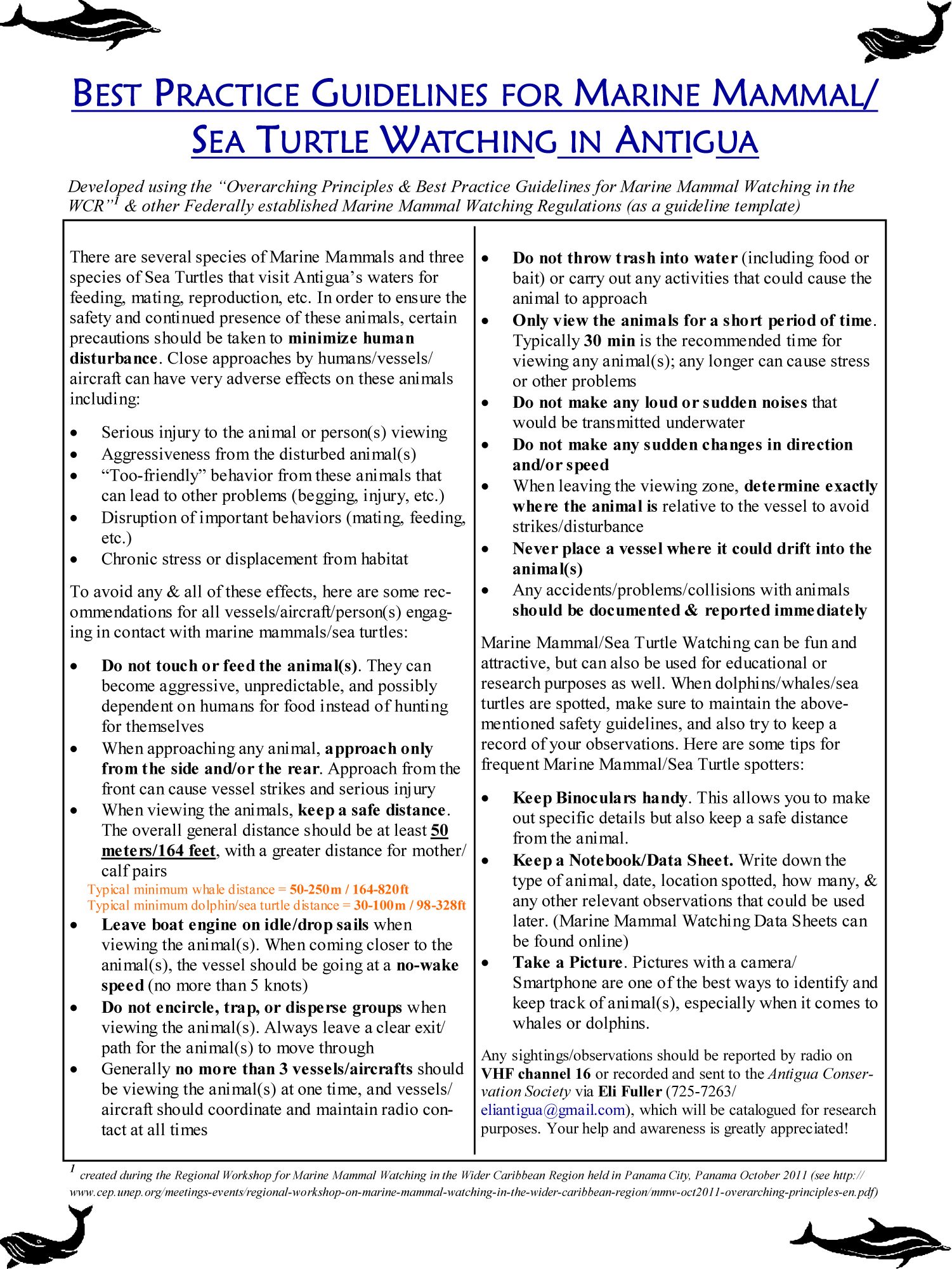
Whale and dolphin watching in Antigua and Barbuda becomes more organized.
Nicola was happy to jump on a plane last minute and in no time was representing Antigua and Barbuda at this very important marine mammal conference.
She gathered so much info and made great contacts with other organizations from around the Caribbean and further. Together with the Antigua Conservation Society and The Environmental Awareness Group, Adventure Antigua has come up with a list of guidlines for people and tour operators here in Antigua that many come into contact with Dolphins and Whales.
(If you want to download a larger version click here)
We will be on the radio today from 11am speaking about whale and dolphin watching as well as other aspects of this interesting topic. To hear us speaking on 91.1 fm click this link. from 11 am Antigua time today.
Thursday, January 19, 2012
The People’s Republic of China and Antigua and Barbuda - South-South Cooperation OR a NOT SO Benign Dragon?
I have spent almost a year researching the subject of China’s diplomatic relationship with Antigua and Barbuda (AG) and the environmental consequences of this relationship. The recent heightened interest in this subject in AG has prompted me to write this piece.
- Rehabilitation of Big Creek bridge
- Renovation of Grays Farm gutter drainage
- Chinese Multipurpose Cultural Centre in Antigua
- Electrification of KV-69 cable
- Development of the Free Trade Zone
- Reconstruction of Darkwood Beach bridge
- Mount St. John’s Hospital
- Sir Vivian Richards Cricket Stadium
- Government to Government scholarships
- Green Castle Nursery
- Grays Farm Reservoir
- Island Wide Street Lighting Project
- Generators for APUA
- Chinese Cultural Centre in Barbuda
- Construction of new airport terminal