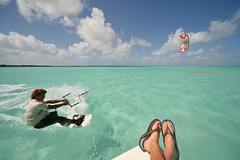
 Even though the real name for the country is Antigua and Barbuda, most people only know of it as Antigua. Barbuda hasn’t just been left out of the name but has been left out when it comes to most things associated with this twin island nation. Those of us who know Barbuda and grew up spending loads of time camping there have tried to keep it secret. My dad and his brothers used to do the 26 mile Atlantic crossing on little Boston whalers when they were teenagers spending a week or two camping and fishing on the deserted coastlines. As soon as I was old enough I started taking the pirogue seen in this pic over as well. I think I was about 15 on my first trip and even though I have been doing regular “Buda” trips ever since then, I never get tired of the adventure.
  Long time friend and former kitesurfing student (haha), Andre Phillip, told me recently that he’d like to go over for a session with some kite gear and asked if I’d be interested in shooting a few pics of the adventure.
  If he had mentioned it several years ago I would have laughed at the idea. You see, many of us have tried for generations to keep this hidden jewel from being discovered. It was working well until the internet changed everything. Photos and stories of the once hidden paradise are now appearing all over the net.
 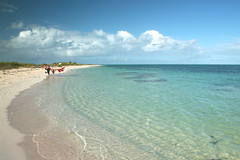 Everything from hotel booking sites, to message boards, to photo sharing sites, to blogs. Although Barbuda isn’t our little secret anymore, I hope stories like this one will help people see what makes the place special. First settled by Amerindian natives some 4000 years ago, Barbuda’s name before the Spaniards arrived in 1493 was Wa’omoni. The Spanish named the island Barbuda but never settled on the dry inhospitable place. The British started a colony there in 1666 and later the island was leased by the monarchy to Christopher Codrington for one fat sheep a year. What a good deal that was. For hundreds of years the small village there survived partially on subsistence farming, but it was the sea that brought bounty to the islanders and it wasn’t just in the form of fresh seafood. There are probably more ship wrecks there per mile than anywhere else in the Atlantic and over the years we have snorkeled on too many to remember. Being extremely low lying and the most North Eastern island in the Caribbean archipelago ships slightly off coarse never knew it was there until the sound of the breakers told them it was all too late. The deep Atlantic gets pushed up from the abyss to a treacherous and sharp coral barrier stretching the entire windward coastline, and with no lights at all on the coast, ships met their end there all too often.
Speaking of boats meeting their end on Barbuda, my girlfriend thought it was gonna be our turn as we left Antigua last Friday. IT was blowing and the shallow passage made those short 9-12 foot waves stand up pretty tall. Thank goodness we were not doing the crossing on the old pirogue. This time we were on Xtreme, my company’s 40 foot off shore power boat designed to be out in the rough Atlantic.
 I know some readers will say “impossible” but we maintained 25 knots and were in the lee of Barbuda’s 14 mile deserted beach within an hour. The boat was built to carry 23 passengers and 3 crew in almost any seas and easily handled the pounding crossing. One good thing about the strong winds was that Dre was gonna get to do some powered kiting.
 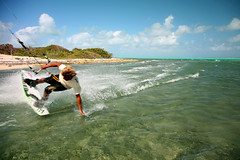 Without a proper north ground swell the barrier reef was a mess and looked impossible to shoot anyone kitesurfing safely. Instead we opted for some shallow flat-water action with the rays and turtles near “fishing creek”.
 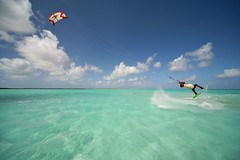 Parrot fish and others have been making sand from Barbuda’s coral reefs for millennia and perfect sandy beaches, sand banks and sea scapes create breathtaking vistas in every direction.
 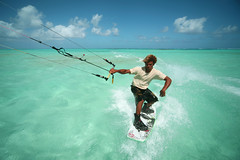 While the crew sat down for the show Dre dazzled and I tried to record the awe.
 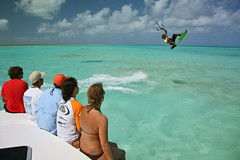 After getting his fill we all went to the beach for some chill time. Actually, we had two newbie kitesurfers on board who had to get out there after the inspirational show Dre had just delivered. The rest of us went off beachcombing. Barbuda has over 15 miles of deserted windward facing shoreline as well and collects all variety of flotsam and jetsam. Beachcombing has been one of my life long passions there and finding messages in bottles and other interesting bits and pieces is a sure thing if you keep your eyes open. Mykl and I found two messages…..well almost two. One was a perfect message in a bottle and the other was two single us dollar bills. Quite often the ink fades or gets washed off by months and sometimes years of condensation. Anyway, when we opened them later the money had no ink other than Uncle Sam’s very own unwashable green.
 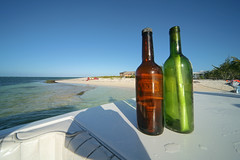 The other bottle had a very interesting message send from the island on Lanzarote in the Canary Islands off Africa. That huge circular Atlantic current goes clockwise connecting the canaries, Africa, the Caribbean, the USA and its gulf stream, Newfoundland, Great Britain, France, Spain, Portugal, and back to Africa. We have found messages from all of those areas which have drifted up on Barbuda’s windward shoreline.
  While Olly and JD did a perfect and picturesque kitesurfing downwinder, we followed in Xtreme doing a little fishing.
 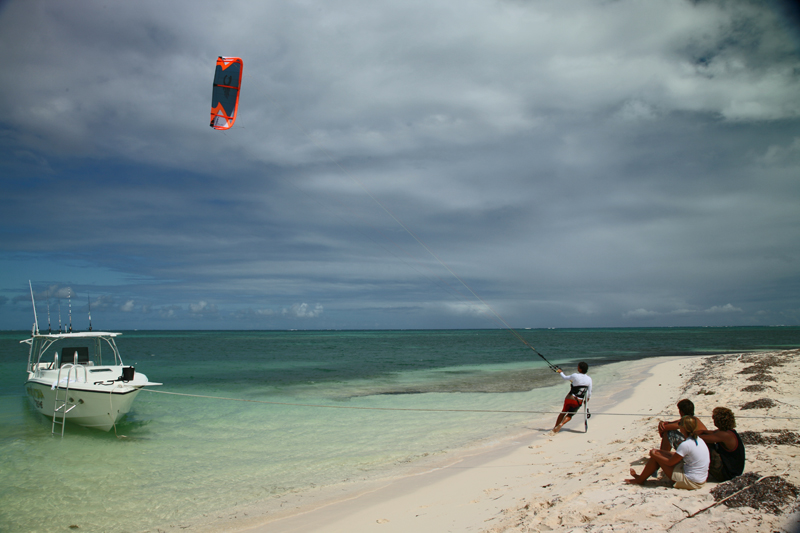 All seven of us were going to be staying at North Beach Cottages which is a locally owned “hotel” on a deserted stretch of sand out in the middle of nowhere.
 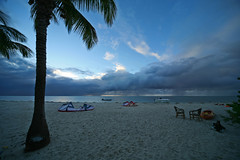 In other words we had the perfect place to spend the weekend.
 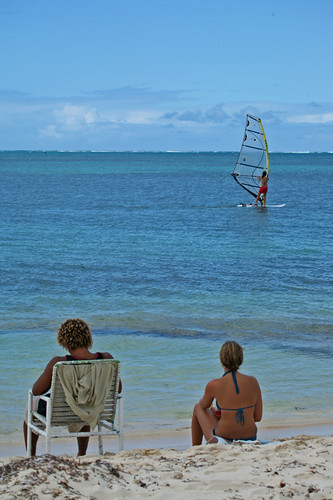 Reuben, the owner built these cottages just after a category 5 hurricane flattened his last attempt back in 1995. The three little cottages are built around a central pavilion and kitchen.
 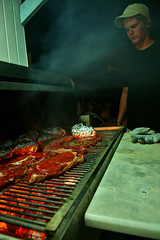 All food and drinks are provided and all you have to do is enjoy the idyllic natural surroundings of your own private bit of paradise.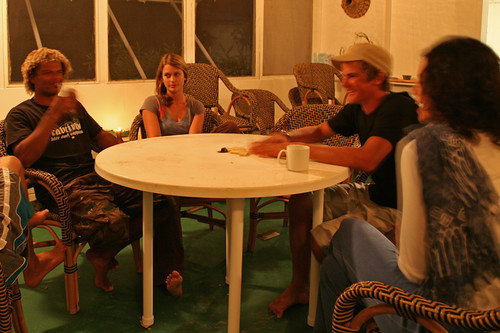
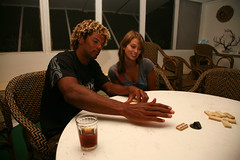
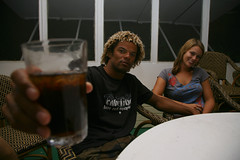 The only other souls you see while staying there are the occasional fishermen going past after making the 30 minute trip from town.
  We had a blast and Dre made the most of the protected shoreline adjacent to the property.
 Late in the afternoon and again in the morning he sessioned the point just five minutes walk from our cottages.
 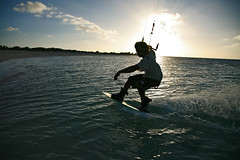 Kitesurfing within this natural coastal environment made Dre extremely proud to call this home.
 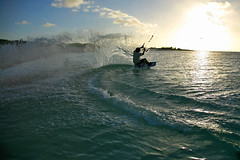 Its one thing to go with a bunch of industry associates on a work related adventure to some remote exotic shore somewhere hidden in the pacific ocean, but being right at home with a few friends doing it for real is way more rewarding and relaxing. Reuben, the owner of North Beach, is a long time family friend and let us do our own thing after showing us how to run the generator and reverse osmosis system.
 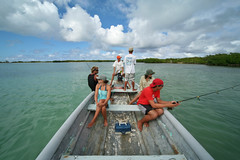 With the old pirogue from my childhood days, we caught fish for dinner and explored the mangrove inlets at the entrance of the lagoon.
 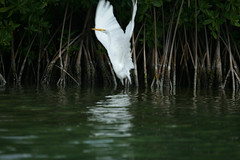 The incredible eco systems worked in harmony around us as we visited as if aliens secretly viewing a far off planet.
  As I said earlier, I won’t ever get tired of doing this kinda stuff and I pray that the people of Barbuda don’t allow big hotels to come in and spoil it all.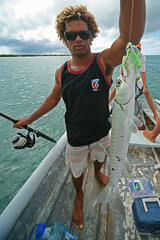
 There is only one large hotel and even that isn’t that big. Before making our crossing back to Antigua, two nights and three days after arriving, we made a stop at the closest point to home. Coco Point that is.
 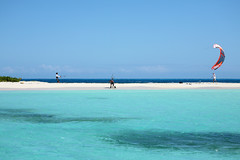 Coco Point Lodge was started in 1962 as fishing and hunting lodge by a wealthy New York lawyer. I read his book once and he described chartering a plane in Puerto Rico and searching for the Caribbean’s most perfect beach. There isn’t much doubt in our minds that he found it back then and its perfect for just about everything including kitesurfing. As we arrived on Xtreme we noticed that guests staying there had about 5 little kites flying from the palm covered beach.
 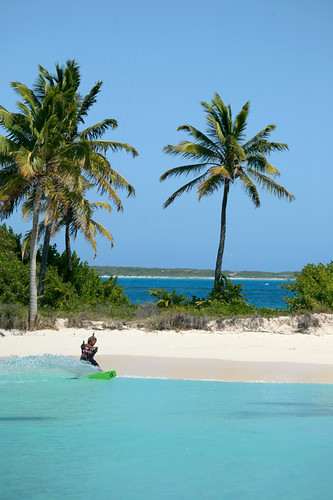 With 164 acres of land on its very own peninsular, the 34 hotel rooms have amazing views of both the Atlantic on the windward side and the Caribbean Sea on the lee side.
 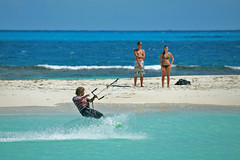 Dre and Olly had to experience the views from a different perspective….from the water!
 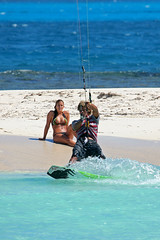 Wow it was beautiful to see even from behind the viewfinder, and as if the wind gods were listening to my girlfriend, it started to get light just when we were ready to make the move back to Antigua.
  The fast ride home was smooth, and we were back in port with plenty of time to get washed up and run off to the cricket match with bottles of rum in toe. Cricket is another Caribbean story all together!

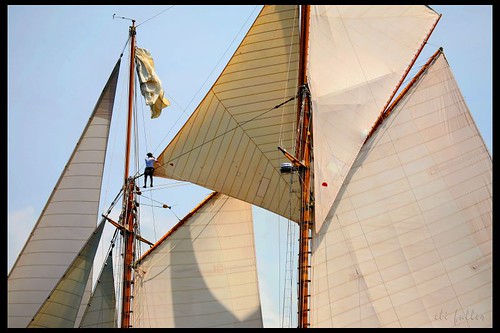
 Over the past 50 years sailing regattas have become more common around the island chain with Antigua Sailing Week being the most famous of all. Yachts from around the world competed every year to be the fastest.
 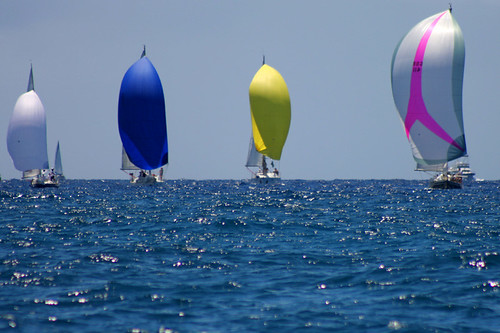 While boats in Sailing Week got faster and more technologically advanced each year, the older vintage yachts found it more difficult to compete. Even skippered by the most experienced racers these beautiful yachts just were no match for the newer racing machines.
 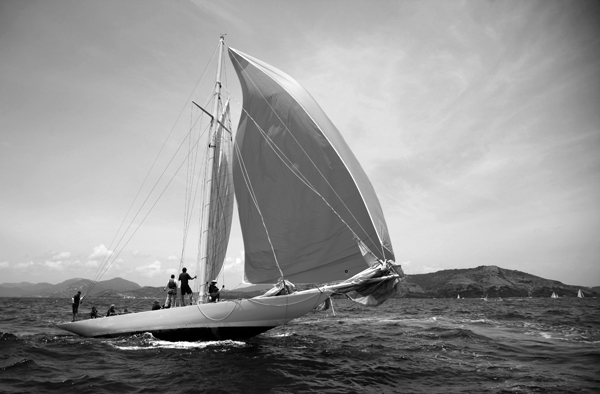 Something had to change, and in 1988 a small group of vintage “Classic” yacht owners got together and competed in a separate event which was called The Antigua Classic Yacht Regatta. Since then it has grown to be one of the most prestigious events of its kind with beautiful masterpieces of vintage design get together to compete.
 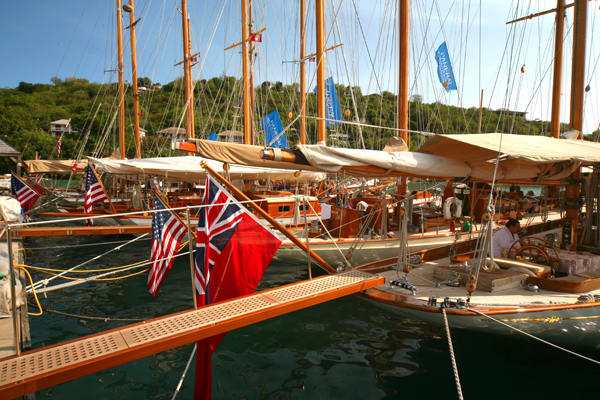 To be considered eligible in this regatta yachts have to be vintage sailing vessels or modern ones built according to old designs. Most of the yachts racing in the event since its inception in 1988 were built in Europe or in the USA, but recently Caribbean built boats have been joining in with ever increasing numbers and popularity.
  During the early days of European colonization in these Islands many cargo boats were built up and down the Caribbean chain and used to quickly sail from island to island with loads of everything from fish to sugar to sand to cement. You name it and Caribbean built boats carried it. Sadly due to a huge variety of reasons there are only a few places left in the Caribbean still hanging on to the fading art of wooden boat building. The little Grenadine island of Carriacou is probably best known these days for its traditional boat builders.
 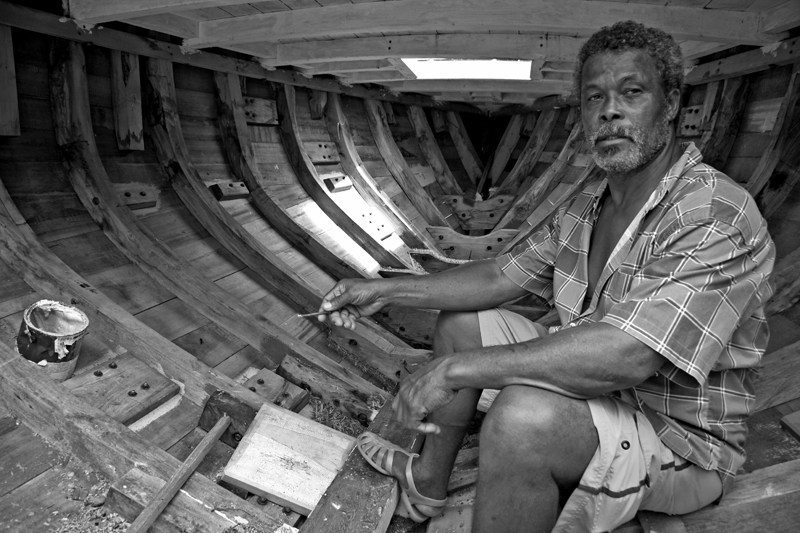 This small group of craftsmen still has skills left behind by Scottish boat builders brought to the island back in the early 1800s to build trading boats for plantation owners.
  Carriacou Sloops is a
 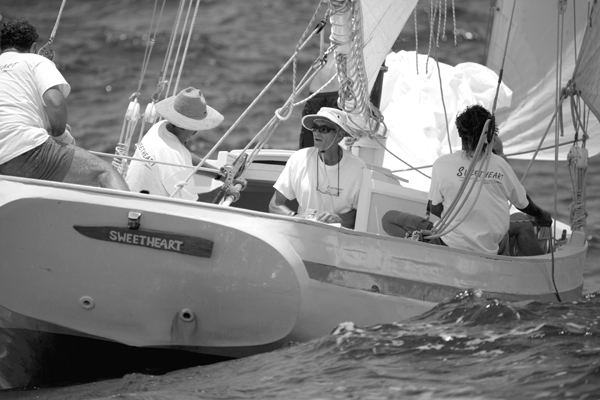 Back in the early 90s a local sailor and racer by the name of Eddie Barreto decided that he was going to commission a yacht from Carriacou knowing all too well that these classically designed boats were as fast as they were beautiful.
 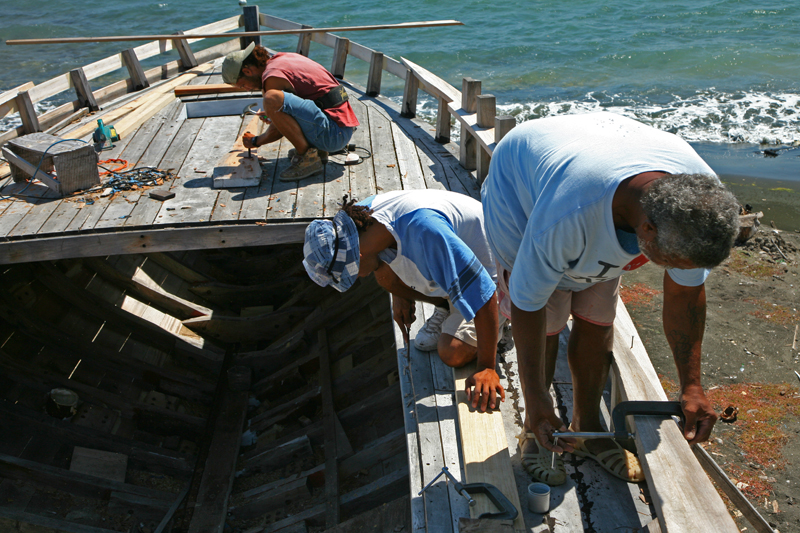 Having one of these boats commissioned is the start of an amazing journey that only leaves the owner with a greater appreciation for his/her yacht.
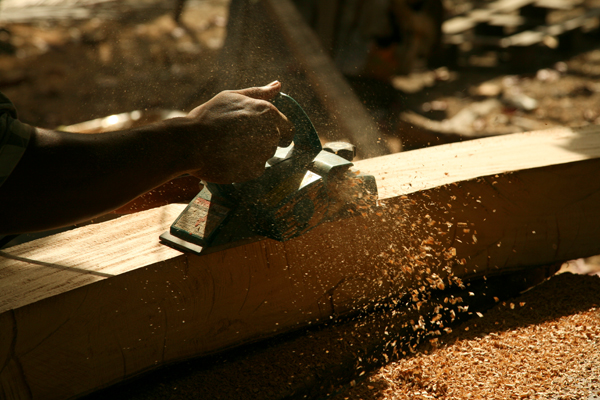
  Everything from cutting local wood from the local forests to the final traditional beach launch is a process which has almost been forgotten around the world.
 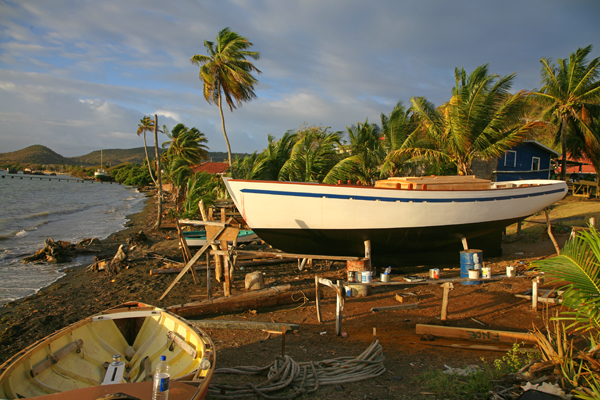 A person can only feel blessed to have been part of the process that was undertaken to build the boat he or she is sailing at the end of the day.
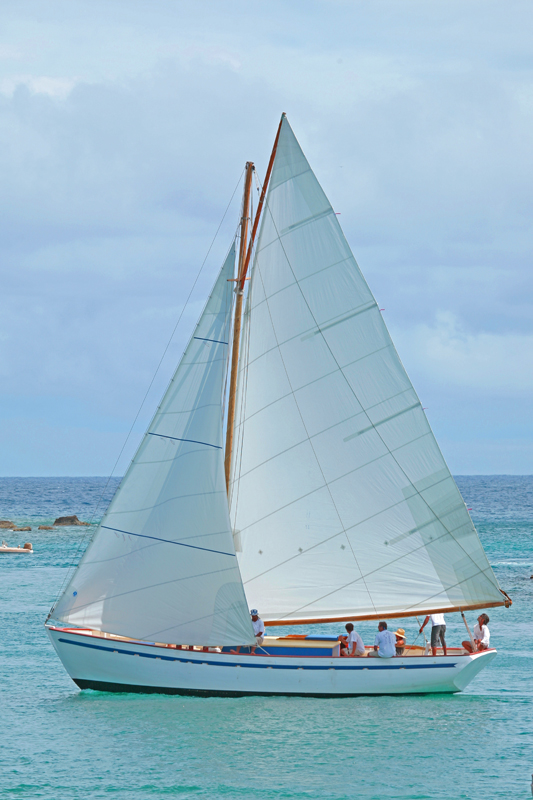
 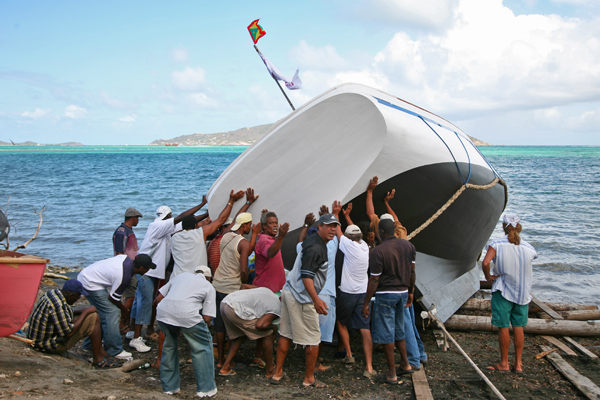 Eddie’s Carriacou sloop was the first of these boats to race in Antigua classic yacht regatta nearly 15 years ago. As more and more of these special yachts took part, a category in the regatta dedicated to these wonderful gems called “The Traditional Class” was added. In 2008 there were eight of these proud, colourful, Caribbean yachts racing together and with others being built as these words are written the class will only get bigger.
  My yacht “Ocean Nomad” was sitting half built on the beach in Carriacou only a few months before the regatta when I was asked to finish her.
 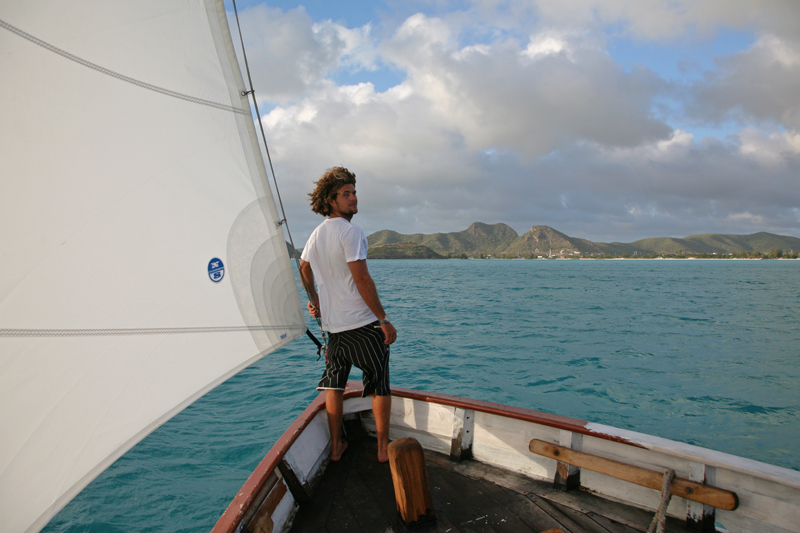 The challenge to get her finished and ready to race sparked my interest and with a dedicated team of local builders as well as a
 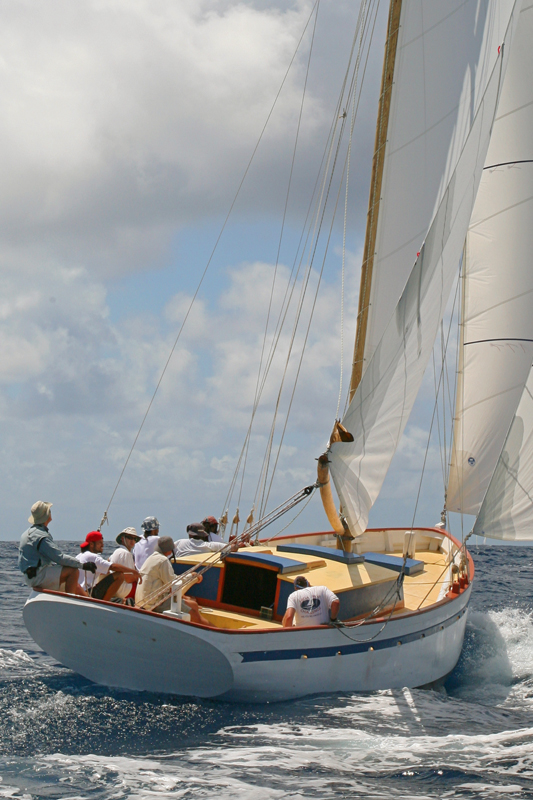 We managed to finish 2nd overall in our class behind Alexis Andrew’s “Genesis”.
 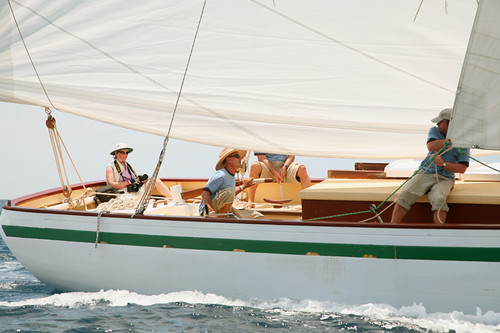 It was a great honor to be sailing in
  The Antigua Classic Yacht Regatta takes place in mid April and if you would like to learn more about it and our own Caribbean yachts look for