Tuesday, August 07, 2018

2017 hurricane stress - photos

The following description puts the photos in the link at the bottom into some sort of perspective. The photos and videos in the link will be moving to some of the Barbudans involved in last summer's tragic distaster.

In late August 2017 I saw a long range forecast which looked like a big hurricane would be coming our way. At that time our Atlantic rowing boat was still in the British virgin islands where we had rowed almost a month before. There was no time to waste so later that night after clearing customs immigration I left with two friends for the Virgin Islands on our powerboat. We needed to retrieve the rowboat and tow it 200 miles back to Antigua before any threat of a hurricane. People in Nanny Cay Marina were already panicking. Somehow they knew that the island would be devastated in less than a week. We collected the boat and immediately turned around back towards Sint Maarten. At Bobbys Marina, Sir Bobby told us that despite all forecasts saying the storm would go north he was 100% certain it was coming to destroy Sint Martin in a few days. He was getting his companies and his associates ready for a mega hurricane. While we sat around the marina table st sunset drinking beers and talking about old wooden sloops, sailing and fishing, I was still sure the storm would miss the Caribbean. My crew, Shamel and Guilli were not too happy with Sir Bobby's confidence that a disaster was approaching. The next morning we left early towing the row boat back to Antigua. By the time we had completed those last 100 miles, the surge was starting to "roll" across Five Islands Harbour at the entrance to jolly harbour. I was a little frustrated to see that each day the computer models' forecast tracks had shifted further to the south. While still forecast to track north of our Leeward Islands, Hurricane Irma was now rapidly strengthening and getting too close for comfort even though three days away. Each forecast pulled her closer to us and by the next day I started to realize that because of the trip to collect the row boat, I'd be pressed for time in getting by boats and house prepared. It wasn't that it had crept up on me as I'd been watching the forecasts for a week but unlike Sir Bobby, I just placed too much confidence in the forecast tracks which all placed it pushing north of the islands. The marinas were full and I couldn't get space for all of our boats. We had to tie them down as best we could. Irma kept getting closer despite the forecasts and as the sun set before her arrival, I knew that if she didn't turn north and we got a direct hit, then my business and life as I knew it would be changed forever. I don't think I slept a wink and late in the night when the now category 5 storm finally moved a bit to the north I almost cried with relief. Up until that point I was telling my mom and other people close to me not to worry and that all the super computers were in agreement that IRMA would go north. I was faking my optimism and bravery just in an attempt to keep them calm. A few of them were panicking. The North turn was too close though as you can see from the screenshots I took. Barbuda was going to get hit hard. There was zero communication until late the next afternoon when my friend Greg took the PM and a camera crew to Barbuda in the helicopter. Upon his return we heard that over 90% of the homes had been damaged or totaled and that one young child had died. I knew that they would need water and food and organized a small team to go the next morning. Friends in jolly harbour supplied food and water. While that was being organized, i spoke to Carlo Falcone from Antigua Yacht Club and Marina who was also doing the same thing. He called me later in the night to say that the Coast Guard had told him that boats were not permitted to go. It was not 24 hours after the storm but we both knew that things would get desperate soon and decided to  go anyway but to keep it quiet. My team left by 8 the next morning. It was still rough at that point, just 30 hours after the deadly hurricane had touched down in Barbuda. Greg, the chopper pilot had told me that the lagoon had been breached in several spots so I figured that we could go straight up to Codrington village. We were the first boat into the lagoon and the first to arrive at the fisheries dock. We didn't know what to expect and for safety we decided to drop me and another crew off so that we could speak to police or defence force guys first before we came to the dock with supplies. The coast guard had arrived at River Dock earlier that morning and had brought some polices and troops to setup base at the Japanese Fisheries plant. We got the boat onto the dock and offloaded. I was told that there was going to be a council organized meeting at the airport to discuss plans. I went and listened. People seemed to be in shock and unaware of how bad things could become. There was compete devastation all around and dead creatures big and small in the tangled mess. My Barbudan friends didn't want to leave but some did. We offered the council to take whoever wanted to and ended up taking the first Barbuda evacuees back with us. I think we took 16 people. On the dock before we left, the mother of the child that was killed came and told us her story. Heartbreaking! The trip back was an emotional one but those on board were happy to be going. Half way over we realized that some of them didn't have anywhere to go in Antigua. We ended up taking them into town where they were collected by the National Office of Disaster Services. Nico organized lodging for some. Coming back into jolly harbour and knowing that I could have a hot shower and get into my nice dry bed felt strange. Thinking about what we'd just seen and what was going to happen to them was overwhelming. That night we planned another trip the next morning to take more food, water and animal feed. We left early and by the time we arrived we found out that because there was another storm approaching, the government had ordered a mandatory evacuation. We had so many wanting a ride that we left half our crew there planning to do two trips at least and took an almost overloaded trip back to st Johns. In fact, I had to "make some noise" on the dock in Barbuda before we left as too many were pushing and attempting to get on board. 24 hours before we had a hard time convincing people to come with us as most seemed calm and prepared to stay. Amazing what can happen a few days after a disaster when reality kicks in together with the threat of another storm looming. By this time boats of every description were helping to evacuate and the Venezuelan military were also helping. There was still no communication and by the time we dropped them off and came back to Barbuda, the military and police had forced all to leave the village and go up the coast to the grassy strip where the Venezuelans were flying from. My crew that I left behind were forced to fly with them and while I tried to figure out where they were, the swells started to pick up at River Dock. We left two boats there and took off with the last few Barbudans that we could find.
Thankfully that storm did go north but the government and NODS decided not to let people go back home to Barbuda. So many people had left dogs, horses, sheep, goats and other animals penned or tied assuming that they'd be able to return after the storm threat. That didn't happen and the Barbuda disaster got worse. Dogs started hunting in packs and the trail of death and destruction only got worse. We did more and more trips with animal rights people, press, engineers, government people, aid workers and eventually with Barbudans. In the meantime there was another cat five hurricane east of the islands. Maria ended up smashing Dominica, and the Atlantic rowing team I was part of decided to take some supplies there as well. We had heard horror stories and felt like doing a run. It wasn't much and we knew that our boats were not designed to carry huge heavy loads long distance. Thankfully more help was on the way and there were no more storms on the horizon.
By the time Team Antigua Atlantic Rowers had to make our way to the Canary Islands to get ready for the start of the Talisker Whisky Atlantic Challenge (a 3000 mile rowing race back to Antigua), Nico, John, Scott and myself were happy for the distraction. The summer had been a stressful one.
Here's in this link are some photos my Google account saved. I'll show a few below the link too.
https://photos.app.goo.gl/QN5NjgHGe8vX5GJ39


Monday, May 23, 2016

More and more invasive species doing damage

Halophila Stipulacea is the newest invasive species making a mess of our marine habitats and Antigua and Barbuda could be a favorite new home for it.
Just over a year ago we started seeing this grass floating all around the island especially in protected bays and harbours. I even saw it far offshore in the Atlantic while freediving. It was quite a surprise to see it suspended in the water column thirty miles offshore.
From http://www.sciencedirect.com/science/article/pii/S0304377013001289 "Native to the Red Sea and western Indian Ocean, H. stipulacea spread to the Mediterranean Sea in the late 1800s and became established in the eastern Caribbean in 2002. The species has dispersed north and south of its first sighting in Grenada and now spans a latitudinal distance of 6° (>700 km), most likely facilitated by a combination of commercial and recreational boat traffic."
So what?
Well, this grass notoriously spreads very quickly often displacing other native seagrass beds. Our country's seagrass beds are incredibly important providing food and habitat for a huge variety of marine animals. In fact, there are some islands without much seagrass bed type habitats that wouldn't see certain creatures at all if it were not for large seagrass beds from islands like Antigua and Barbuda. Some species of sea turtles would be severely effected if our native seagrass habitats were overrun.
Last year my company, Adventure Antigua took part in an in-water sea turtle study with our Antigua Sea Turtle Project. We surveyed the Carlisle Bay area for several days and never noticed any beds of halophila stipulacea, but yesterday Roddy Grimes-Graeme and I saw large beds in quite a few areas there. The photos attached show one spot where it seemed to be mixed with and displacing turtle grass.
I have no idea how we can deal with this but just shows another reason why we have to be careful to protect marine habitats and their species. Habitats and related species that are already under threat or pressure from human activity are easily damaged by invasives. I'm sure we'll hear more and more about this situation over the next few years. We here in Antigua and Barbuda need to understand that it's not just reefs and mangrove habitats that need protection. Seagrass beds are incredible hot spots for biodiversity (read more) and equally important in the fight against climate change (read more).
Ten hours after blogging this today my son kicked his ball into the water of jolly harbour marina by accident. I grabbed a raft and found the weed shown on the white background right next to the ball. It's everywhere!

Monday, February 08, 2016

Antigua's greatest adventurers - Team Wadadli


When #teamwadadli comes in to Antigua there will be many records set, but the achievement is more that just record breaking. The precedent being set is something so unique for this region that all Caribbean people should be proud. The great adventurers and explorers we have read about and seen on the TV almost always come from far off places, "worlds" away from our cricket fields and paln fringed shorelines. These adventures are the thing of dreams and stories for many of us here in the Caribbean. Until now! This astonishing adventure often described as a crazy endeavor could inspire a new generation of home grown explorers and adventurers who now know that the stuff that was once merely dreams is achievable by us little people here on these little islands. 

When Doc Nick Fuller decided to take the plunge I don't think he had any idea what kind of splash he would end up creating here in Antigua and Barbuda. I don't think that while rowing just 300 miles east of us that he even knows now what an incredible following the team has or the emotion that is on the verge of overflowing when they get here. When something is posted on the Team Wadadli Facebook page in the morning, it usually has hundreds of "likes" and comments by the end of the day having been seen by thousands. The island is buzzing with excitement and people from all walks of life are taling about Team Wadadli.

When he started his team's website, even before he had found anyone to join him he wrote the following:

"For several years, we have enviously watched small contingents of brave-hearted and adventurous individuals row into English Harbour here in Antigua, as they complete the bi-annual Atlantic Campaign’s Rowing Challenge, the so-called “World’s Toughest Ocean Rowing Race”.
As these rowers approached Antigua from the East, We have often powered up to meet them in our sport-fishing boat some 30 miles above Antigua, watching in awe as these sunburnt and weary seafarers slowly row their way to English Harbour to complete their transatlantic 2,800 mile journey from the starting point in the Canary Islands, just sixty miles off the coast of Africa. It has often been said that more people have been into space or to the top of Mount Everest than have rowed across the Atlantic." 
He went on to say that it was proving to be difficult to find anyone willing to join him:
 "Unfortunately so far the ones that I’ve asked to come with me have given me a peculiar look and then walked away laughing."
Let's face it, this is a Herculean task and maybe they were all crazy to sign up.....even the Doc! That being said, all of history's explorers were once described as crazy, and thank goodness they were not dissuaded. A quote that is often wrongly credited to Steve Jobbs but was actually spoken by Rob Siltanen reminds us that the crazy ones sometimes change the world.

“Here's to the crazy ones. The misfits. The rebels. The troublemakers. The round pegs in the square holes. The ones who see things differently. They're not fond of rules. And they have no respect for the status quo. You can quote them, disagree with them, glorify or vilify them. About the only thing you can't do is ignore them. Because they change things. They push the human race forward. And while some may see them as the crazy ones, we see genius. Because the people who are crazy enough to think they can change the world, are the ones who do.”
Team Wadadli gets its name from the Amerindian name for Antigua. These early indigenous adventurers and explorers who traveled from island to island in small wooden dugouts, explored and inhabited them long before the European's dreamed of sailing here. They rarely are talked about these days. Team Wadadli not only reminds us that the earliest Antiguans and Barbudans were explorers going from island to island in tiny boats at one with nature, but fills us with pride in knowing that we can still be explorers and adventurers. Wa'Omoni is the name of our team's boat, and that name is the original indigenous name for Barbuda, our sister island. 

This adventure is truly akin to Edund Hillary's first summit of Mount Everest in 1953. I can't help but feel that it is like America's Neil Armstrong fist stepping on the moon in 1969, or Russia's Yuri Gagarin's first orbit in space years earlier in 1961. It's like Dame Naomi Christine James being the first woman to sail solo around the world, or  any other of the great adventurers' or explorers' accomplishments. For a little island in the Caribbean, this is a huge big deal and one that people here are excited about. All of these people returned home to huge fanfare and celebrations, and I think Team Wadadli not only deserves the same but will undoubtedly receive it. 

Nick Fuller, JD Hall, Archie Bailey and Peter Smith will go down in our history as great explorers and adventurers and there can be no doubt that they will inspire others to follow. I have already seen comments from other nearby islanders who have no expressed interest in being just as "crazy" as our team. The little kids I spoke to in the preschool that JD attended when he was a kid didn't think Team Wadadli was crazy, but they were all filled with wonder and amazement which is what so many kids these days are missing. 

It looks like our team will either arrive sometime between Wednesday afternoon and Thursday morning into Nelson's Dockyard. Be there! It's going to be special. 

Friday, October 09, 2015

Mitigating Climate Change in Antigua and Barbuda

While out on our boat tours I love to tell the story about how the artifacts of an Amerindian settlement disappeared one day back in September 1995. This archaeological settlement along Barbuda's south coast had been there since the earliest inhabitants lived there 1500 years ago, and in one day all evidence of that site washed away in the monster of a storm called Luis. The purpose of the story is to explain to my guests just how strong that hurricane was and to give an idea about how climate is changing. There are various climate change factors which contributed to the damage Antigua and Barbuda received in Hurricane Luis and each year we are finding out more about this thing we call Climate Change. Stronger than normal hurricanes are not the only thing we need to worry about with this new reality. 

According to scientists, the measurable signs of climate change are varied. Sea level rises which account for 6.7 inches over the past 100 years and the rate over the past ten years being nearly double that of a hundred years before are probably the biggest concern for small island states. Global temperatures rising is another symptom of climate change, and since 1880 the ten hottest years as measured by NASA occurred over the past 12 years. Coupled with the air temperature is also a global sea temperature rise. Another symptom is shrinking of the Greenland and Antarctic Ice sheets. NASA satellite imagery show a significant decline in ice coverage for these areas since 2002. The same is happening in the Arctic as well according to NASA's satellite imagery. The world's glaciers are also retreating at alarming rates. Ocean acidification is another measurable factor of climate change which is increasing and having a huge impact on all creatures using calcium carbonate like for example, the world's corals. This summer there were several studies showing oceanic current changes and highly ususual changes in Atlantic water temperatures. The US Department of Commerce's National Oceanic and Atmospheric Administration (NOAA) says that the oceans have a interconnected collection of water currents which they describe as the Global Conveyor belt. They say that there is scientific evidence that with higher rainfall amounts in the North Atlantic and the melting of the sea ice and glaciers, there will be a much higher influx of fresh water into the sea which ultimately would lead to less cold salty (denser) water sinking. Normally this cold dense salty water sinks and flows south forming the main starting point of the Conveyer Belt's "streams". Scientists are extremely worried that this could have drastic and very immediate implications for the world's weather which is intricately linked to oceanic circulation. All in all the evidence is now becoming irrefutable and whatever you may think is the cause, the effect has major implications for us here in little Antigua and Barbuda. I have seen the changes happening and the most noticeable has been to do with the corals and those species, systems and industries that rely on healthy coral reefs. 

My team takes guests by boat on sightseeing and snorkeling excursions around our island's coastline. We have been doing it as a business each week since 1999 and for fun for much longer than that. My brothers and cousins grew up often spending more time on boats and on the sea than we did on land and the changes we have seen have been dramatic. The reefs which were vast fertile forests of corals are now ruins which look like messy piles of stones and rocks with scattered bits of soft corals and the rare piece of hard coral. It's difficult to explain to people what it looked like before the big die offs in the 90s, and it's probably better that they didn't know what it was like. It was a real magical wonderland and now there are only a few places on the planet that look like what it did all those years ago. Intricately linked with Climate Change and the health of coral reefs is fishing and in our case unmanaged fishing. Herbivore species of fish like parrot fish (chub), surgeon fish (doctor fish) and others help keep reefs healthy by feeding on algae which grows on dead corals while producing huge amount of sand in the process. Corals need sunlight to survive and when algae covers reefs they quickly perish. Climate change factors like stronger hurricanes, coral bleaching, ocean acidification as well as other stressors for corals are mitigated when there is a healthy population of herbivore fish preventing algae from taking over the live corals left on the reefs. Unfortunately, some of the species most often targeted by inshore fishers are these same reef cleaning species. There are some islands nearby that have Marine Protected Areas teaming with fish and have coral reefs which appear more healthy than our own. The main difference is that these particular areas are carefully managed with enforced fishing regulations. Sadly for a number of reasons our MPA sites are not yet carefully managed. Our government's Fisheries Department has fought hard to protect these species in recent times with new regulations and even closed seasons for parrotfish, but with only a tiny budget to do the actual work on the water, they have had a difficult task. When we guide guests through our reefs we often get comments about the scarcity of fish seen and as hard as it is to hear their comments we know that it's true. A few years back I took some of my team to the Tobago Cays which is a MPA in St. Vincent and the Grenadines. As we pulled up to an anchorage we were met by wardens who gave us a warm welcome and provided us with info about the park. We were asked to pay a small fee and were encouraged to enjoy snorkeling. My team were blown away with how beautiful the reef was and especially with the large numbers of fish, lobster, turtles and conch we saw. Corals seemed healthy compared to anything we had back home and it was a joy to be there. That lesson of what a well managed Marine Protected Area could look like stuck with my team and the example is seen over and over around the world where special areas are well looked after. Climate Change is a reality we can't avoid but looking after our reefs significantly lowers the impact of climate change on them and by extension on us all.

Tuesday, July 14, 2015

Killing sharks and eating their meat is more dangerous than swimming with them.


Recently the Daily Observer newspaper YET AGAIN published a photo of a large dead mother tiger shark. This one had just been landed in Jolly Harbour by some local fishers. I can't remember exactly but the caption was something like "this wonderful delicacy will be eaten by many lucky residents." Each year sharks come inshore to give birth to their live babies. The puppy sharks as many call them spend their early years close to shore where they are able to hide from predators and feed on other small marine creatures. This has been going on for millions of years before the first indigenous people travelled here from south America. Their numbers now are dwindling thanks to mankind. Shark conservation is extremely important and something taken seriously in many places around the world..just this week a video of people saving a stranded great white shark in the USA went viral.
I am writing this on behalf of the Antigua Conservation Society (ACS) in the hope that the Antigua Observer will stop printing such unfortunate pieces which ultimately cause damage to a species which is under pressure from over fishing and habitat change. What is even more important than that is the ACS hopes to educate The Observer Media Group and the people of Antigua and Barbuda on the very serious dangers of eating sharks and other large marine predators.
The Food and Drug Administration (FDA) in the USA has done extensive studies on shark meat and strongly advise the following people to avoid consuming it.
  • Women Who Might Become Pregnant
  • Women Who are Pregnant
  • Nursing Mothers
  • Young Children
The reason for this food warning is mercury and methylmercury which are toxic to humans. According to the Environmental Protection Agency: "Mercury occurs naturally in the environment and can also be released into the air through industrial pollution. Mercury falls from the air and can accumulate in streams and oceans and is turned into methylmercury in the water. It is this type of mercury that can be harmful to your unborn baby and young child. Fish absorb the methylmercury as they feed in these waters and so it builds up in them. It builds up more in some types of fish and shellfish than others, depending on what the fish eat, which is why the levels vary. Nearly all fish and shellfish contain traces of methylmercury. However, larger fish that have lived longer have the highest levels of methylmercury because they've had more time to accumulate it. These large fish (swordfish, shark, king mackerel and tilefish) pose the greatest risk. Other types of fish and shellfish may be eaten in the amounts recommended by FDA and EPA."

Methylmercury causes central nervous system and spinal cord damage in humans. Symptoms of this damage can be:


  • Blindness
  • Cerebral palsy
  • Deafness
  • Growth problems
  • Intellectual disability
  • Lung function impairment
  • Small head (microcephaly)

  • The Antigua Conservation Society is very concerned with calling tiger shark meat a delicacy. Do more research. Even healthy adults are advised to eat small portions of shark meat once or twice a week at the most.
    As I mentioned, tiger sharks face many pressures. According to Wikipedia: "The tiger shark is captured and killed for its fins, flesh, and liver. It is caught regularly in target and nontarget fisheries. Several populations have declined where they have been heavily fished. Continued demand for fins may result in further declines in the future. Tiger sharks are considered a near threatened species due to excessive finning and fishing by humans according to International Union for Conservation of Nature.[2]
    While shark fin has very few nutrients, shark liver has a high concentration of vitamin A which is used in the production of vitamin oils. In addition, the tiger shark is captured and killed for its distinct skin, as well as by big-game fishers.[5]
    In 2010, Greenpeace International added the tiger shark to its seafood red list, which is a list of fish commonly sold around the world, and which have a very high risk of being sourced from unsustainable fisheries."
    Many Antiguans like watching whale wars on TV. What they don't know is that the Sea Shepherd gang have faught even harder for shark protection. To find out why click this quote from their website:
    "Sharks keep our largest and most important ecosystem healthy. Our existence, in part, is dependent upon theirs. Sharks have sat atop the oceans’ food chain, keeping our seas healthy for 450 million years. They are a critical component in an ecosystem that provides 1/3 of our world with food, produces more oxygen than all the rainforests combined, removes half of the atmosphere’s manmade carbon dioxide (greenhouse gas), and controls our planet’s temperature and weather."

    Before anyone jumps up and down saying something like "sharks need to be killed because they are dangerous", please ponder these facts:
    655,000 people killed each year by mosquitos
    2,900 people are killed by hippos
    130 people killed across the U.S. by deer
    53 people die each year in the U.S by bees
    35 are killed each year in the U.S. by dogs
    20 killed by horses in the U.S. each year
    25 by cows!
    Globally 6 people are killed each year by sharks.

    The Antigua Conservation Society thinks that the brave fishers that catch sharks should be encouraged to target other sustainably caught species that provide good safe protein for the people of Antigua and Barbuda.


    Thursday, June 25, 2015

    Fish Aggregating Devices in Antigua and Barbuda - a can of worms.

    Since 2006/7 I have been fishing on and writing about Fish Aggregating Devices or FADs here in Antigua. What is a FAD? If "fish aggregating device" doesn't explain it well enough, then just imagine a FAD as an artificial reef anchored out or in some instances floating in deep water where a massive food chain is attracted artificially for the purpose of exploitation. I suppose "exploitation" isn't a nice word for some and they would rather hear something else like FADs attract fish so that fishers can catch more fish. That too!

    Anyway, at the end of the day a FAD aggregates fish which means it brings together fish that would have normally been spread out across a larger section of open ocean. FAD fishing in our exclusive economic zone (EEZ) has been primarlily done by fishers from the islands of Guadeloupe, La Désirade and from Saint-Barthélemy (St. Barts). In the French islands they call them DCPs. Do a youtube search for "Pêche sur DCP" and have a look at some of the vids. Some of them could very well be in our warters!
    We don't know how many of their FADs are in our waters or how many fishers from these islands fish in our exclusive economic zone (EEZ) each week. Suffice to say that the very small number of our local fishers who fish offshore see many foreign FADs and their fishermen each week. Click here for an old blog post about illegal FAD fishing. In many cases the foreign fishers attempt to chase our local fishers away from these FADs. I wrote about that here back in 2011 when it happened to me. I know many local fishers who have been threatened. Some have had their equipment destroyed by these foreign fishers. I remember a boat called MiniBite reported that during an Antigua Sport Fishing Event a Guadeloupe boat deliberately ran over their lines cutting all. This past weekend a friend called Stevie was threatened by foreign fishers when he approached one of their FADs just 20 miles from shore. Fishing on FADs when you know what you are doing, gives you a better chance of catching certain fish like several species of tuna, marlin, mahi mahi, rainbow runner and even wahoo. Conservative estimates suggest that there are hundreds of thousands of pounds of these species being caught by foreign fishers within our EEZ each year. It very well may be over a million pounds a year depending on which local commercial fisher you speak with. I am convinced it's over a million pounds of fish a year. In those islands where fish sells for more than it does here, the dollar amount is probably close to twenty million EC dollars a year. And that number is probably growing while the amount of the same species being caught in the traditional fishing grounds by long time local fishers diminishes every year. After speaking with some of the French fishers about their FADs in our waters they argue that they are permitted to fish where they are because the waters are not Antigua and Barbuda "Territorial Waters". They are correct that most of their FADs are not within our Territorial Waters but they are wrong thinking that they are legal to fish there because they seem not to understand what the Exclusive Economic Zone is. For a good definition of all these things click on this link (especially if you are a fisherman from one of our neighboring islands). 
    Most commercial fishers blame FADs for the decline in stocks on the "edge" (continental drop off) and offshore banks (sea mounts) saying that historical migratory routes are being changed by all the offshore FADs which are being set as close as 5 miles off our shelf and as far as 70 miles off shore. Of course, FADs may be being set further but our local fishers are not venturing that far off yet. Recently I visited a FAD anchored in 15,000 feet of water. The amount of rope needed for that would probably be three times that!

    "If You Can Beat Them, Then You Join Them!" This has been the attitude of more and more local fishers who have given up on our government's ability to understand or to deal with the problem of foreign FADs within Antigua and Barbuda Exclusive Economic Zone. Some local fishers spend huge amounts of money and time searching for, finding and then fishing on these foreign FADs whenever the owners are not around and some have invested tens of thousands of dollars into building and setting their own FADS. Recently over the past few years the Government of Antigua and Barbuda has received resources from Japan to set FADs of their own. Instead of fixing existing FAD problems within our EEZ, this move by Japan and our government could be creating more problems associated with FADs. As is usually the case with underfunded government departments that are run without effective and well informed leadership (think Ministerial level here), policy and management decisions have made a mess of an already disorganized situation. Why do I say this? Let me explain. A few years ago thanks to the sustained efforts by some of us, new fisheries regulations were passed taking stagnating Fisheries management out of the 1980s. All fishers had to register properly for the first time with the government Fisheries office and get licenses. The commercially licensed fishers all had to provide various contact details and other info including the type of fishing that they were engaged in. I only fished pelagic species of fish and mentioned that I fished FADs. Anyway, many others did the same. Recently when our government got the FAD making bits and pieces from Japan, a small number of fishers were contacted to ask them for help in constructing and setting these FADs. I only know about this because I am friends with several of them. I don't know how many government FADs were set or what was the extent of the Japanese FAD funding received here in Antigua and Barbuda because there seems to be tight secrecy about this funding and the FADs. Only certain fishers were invited to help make the FADS and only certain fishers were given the positions of these Government FADs. When I asked my friends why this was they tell me that it was felt that only people who helped make and set them should be permitted to fish them. When I pointed out that it was strange that only certain Antigua and Barbuda commercially registered fishers (many who are non nationals) were told about the opportunity to help build and set these FADs, I was told that they felt that the people invited were viewed as FAD fishermen by Fisheries.
    There have been several meetings at the Government Fisheries base where catering was prepared and discussion on FAD policy took place. Again, only certain Fishers were contacted about these meetings despite Fisheries having contact info for all of the commercially registered fishers who registered as fishing for the species found on FADs.
    Since these FADs were set off shore, they have been spotted and fished by other commercial fishers. In fact, one very calm day I found three of them while out looking for mahi mahi south of Antigua. I have been told that certain fishers who helped construct these Japenese sponsored, Antigua and Barbuda owned FADs are furious that other locally licensed fishers are now fishing on them. It appears that the FAD conflict is now not just between foreign fishers and our local fishers but now between local fishers too. This is madness and is caused by poor decision making, policy and planning at the Government level. At the end of the day our nation should be attempting to alleviate the pressure put on our inshore fishery and environments by encouraging fishers to fish off shore for pelagic species which can be fished more sustainably. Fishers displaced by no fishing zones within Marine Protected Areas such as NEMMA and the Cades Reef and Cades Bay Marine Reserve as well as the growing number of inshore fishers who simply can't catch enough to feed themselves, should be educated about pelagic fishing and be encouraged to fish FADs if we are indeed going to be setting them.
    But there are many other problems arising. One of the worst problems about FAD fishing is that it is felt that with the huge number of FADs being set in the Atlantic 20 to 70 miles from our shore, the fish are simply not coming to the traditional fishing grounds. I mentioned this but to be specific the area known as South Bank was once teaming with four or five different species of tuna and mahi mahi (dolphin fish). These days you are lucky to see any. The same species are being caught less than ten miles away on FADs. Similar stories from long time fishermen are told all around the island. Recently FADs set by the government close to an area called "The Bubbies" are catching large wahoo. This is unusual for FADs and the many charter fishers that have traditionally fished the area have noticed a dramatic decline in their wahoo catch recently. The small blackfin tuna that congregated around that area have vanished. Blackfin are the main prey of the big pelagic species typically caught on FADs like Blue Marlin, Yellowfin tuna and Albacore. They congregate around FADs in large schools. Sometimes you arrive at a FAD only because you see a massive flock of birds feeding around Blackfin tuna which are tearing up the water while feasting on smaller prey. This was a sight seen at many spots around our twin island's continental shelf until recently. Pelagic species now have an artificial "shelf" made up of a ring of secretly placed FADs right around our islands. The foreign French fishers are making the most of it while we do nothing about it. Instead of using foreign Japanese fisheries grants (given to us in exchange for our whaling/fisheries vote on the international stage) to do something about the monstrous problem of foreign FADs in our waters, our government is building FADs of thier own and setting them between our shelf and the foreign FADs much further offshore. Even if you don't fish, I am sure you can imagine which FADs will be more effective at aggregating mahi mahi, tuna and other species that are migrating through the region. The ones way offshore or the ones closer?
    Notice I haven't mentioned any sustainability issues. Greenpeace and other international marine conservation organizations are categorically against FADs mainly because of by-catch issues associated with large scale commercial fishing on FADs. So far we only know of small scale fishing by independent operators, but with total lack of concern, enforcement or management of fishing offshore there is a possibility of large commercial operations fishing FADS within our 200 mile EEZ. These large commercial FAD fishers use nets around FADs to scoop up everything that aggregates there while searching for one or two particular species. The rest is discarded dead as by-catch. Imagine what this would do to our fishery.
    Blue species are targeted while the white species are discarded as by-catch.


    This Video shows a bit more about Western Pacific Fads and one organization's controversial goal of banning FADs globally. Without thinking much about it I can agree with a ban on net fishing around FADs as clearly it's a bad idea. 

    The implications of turning our backs on a problem that exists are very serious for the people of Antigua and Barbuda. We need to be able to feed ourselves in the future. Food security is essential and while history repeats itself over and over the lessons are often ignored. This problem of illegal FAd fishing has decimated fish stocks of many underfunded and under organized third world nations. I have always felt that Japanese aid is horrifically immoral and this latest funding for FADs continues on their policy of throwing money at us without caring about our long term sustainability. They should be using their free cash gifts to fund studies which would help us understand our fisheries strengths, opportunities, weaknesses and threats. It is abundantly clear that they don't care and the sad part is that despite this being clear, we take the money that ultimately hurts us.

    Since writing the section above, i have spoken with the Fisheries officer who's in charge of FAD construction and deployment here in Antigua and Barbuda.
    I think he was unaware of some of the concerns that many commercial fishers have with FAD fishing. He says that the Japanese funding for FADs is a regional thing and that the reason he only decided to use a small number of fishers with the initial FAD program was that he felt it would be better to get the program started with a smaller group than with a larger one. I pointed out that the process of deciding who to invite clearly was unusual. Some of the fishers were not even nationalized! He agreed with my sentiment that a more inclusive approach was needed and that policy needed to be directed by a larger group than the small group of commercial fishers currently involved in the FAD program. In certain areas FAD fishing is heavily regulated to ensure food security and sustainable fishing. Take for example Hawaii where I am informed that the only FADs that are permitted are government set FADs. There are a finite number of FADs set and these FADs are carefully monitored. Any other FADs set are deemed illegal. A growing number of places don't permit FAD fishing at certain times of the year and some don't permit FAD fishing at all. These nations recognize the danger of FADs if fished without proper management. We here don't have the capability or interest in controlling FAD fishing which has been going on here mostly illegally for a decade already.
    The government of Antigua and Barbuda spends very little of its budget on their Fisheries division, and seems to let the small department get steered or influenced by Japanese policy in many respects. The status quo seems to be centered more on catching more, rather than on the often touted concept of "sustainable use". Japan spends millions of dollars on Antigua and Barbuda fisheries so that they get their whaling/fisheries vote sorted out but none of that seems to be spent on figuring out how to fish sustainably. Antigua and Barbuda's fishers on the whole, are poor people who could be doing much better if the resources they targeted were managed more sensibly or in a sustainable manner. Policy and planning are crucial and I think Japan will ultimately benefit from their manipulation of our Government's Fisheries body. Very little proper study is done to see what species can and should be targeted and very little is spent on educating local fishers on sustainable practices. This FAD situation needs to be looked at, not just by Japanese influenced Government technicians or a small self serving group of fishers but by people and groups looking out for the country of Antigua and Barbuda and it's future.

    Sunday, November 09, 2014

    Learning to fly... under water. Not your regular snorkeling experience.

    In our family photo albums there are photos of me wearing my mask and snorkel on the beach from back before I was five years old. I've been snorkeling regularly since then and of course that's one of the reasons I started my Adventure Antigua tour company in 1999.
    With my cousins Nick and David, I did my PADI scuba Open Water Diver when I was twelve. None of us really enjoyed scuba as much as snorkeling. The incredible carefree freedom of casually slipping over the side of a boat or from a beach with just a mask on had more of an appeal to us growing up than the gear, the seriousness and careful preparation of scuba. We may have just been too lazy or too distracted but snorkeling has always been the main way we've explored the undersea world.
    In my twenties I met Pilou a fisherman from Guadeloupe who could snorkel down to depths deeper than 60 feet for what felt like several minutes without much effort. He'd often go deeper. That was the first time I had seen what is commonly called freediving. Freediving, free-diving, or free diving is a form of underwater diving that relies on a diver's ability to hold his or her breath until resurfacing rather than on the use of a breathing apparatus such as scuba gear. (According to Wikipedia) There's much more to it that that though. Have a read of this more expansive explanation from AIDA which speaks more about the side that has intrigued me for twenty years.
    Unfortunately freediving without training and whenever doing it alone can be very dangerous and sometimes fatal. It wasn't until one of my closest friends was killed while freediving alone, that I learned about what made it so dangerous and why. We'd been doing "breath up" incorrectly all our lives. Strangely that horrible and tragic loss strengthened my interest in freediving and now years later i finally have taken the plunge and received proper training.
    A friend here in Antigua told me about a course he did with Vertical Blue on Long Island, Bahamas. Specifically he suggested I get training with a top international competitor called Jonathan Sunnex who was ranked #3 in world last year. People like Johnny dive using one breath from the surface without scuba tanks using just their fins to depths of over 100 meters (330 feet)!
    Luckily he was doing a training camp at Dean's Blue Hole in the Bahamas for ten days at the end of October and they had space for me.
    First of all, Long Island reminds me so much of Antigua's sister island, Barbuda with its fantastic beaches and wonderfully clear waters that I never felt out of my element. I felt relaxed immediately and more so when I arrived at Harbour Breeze Villas which is where i stayed for 11 nights. I couldn't have found a more relaxing and ideal spot for this type of training.

    Over the next ten days I learned more about my mind and body than I could have dreamed of. We did various yoga and stretching exercises daily, breathing exercise and training, static (not moving) breath hold training, dynamic (swimming) breath hold training, deep free diving training and theoretical class work. It was amazing and I still can't stop thinking about it now, three weeks later. Before going to the Bahamas my personal best (PB) for static breath hold was just under two and a half minutes. We didn't spend too many days focusing on breath hold because after two days of training it was clear that my improvement on static breath holding to over five minutes was enough for the dives we'd focus on. FIVE MINUTES HOLDING MY BREATH!! Yes I was amazed that this was possible in so short a time, but that's what getting trained by the world's best will get you. 

    Before going to the Bahamas I could barely freedive down to 60 feet without great effort. Within a few days I was comfortably diving with one breath to over 100 feet below and coming to the surface feeling fresh and with "more in the tank" as Johnny kept on saying. 

    The safety and attention to the students was top notch and despite having a minor congestion issue which impeded my equalization below 100 feet I was able to get below 120 feet by the end of the course. 

    It was fascinating how using various relaxation techniques and a breathing technique I'd never used before I was able to control my breath holds to safely get to those depths. 

    Overall with proper training like this a person can safely snorkel or freedive to depths that may have seemed impossible before. The key is training and the focus is always safety. The number one thing I learned while I was there was that you should never dive alone. 

    In January my instructor, Jonathan Sunnex, is making a trip to Antigua and Barbuda to be a guest of Adventure Antigua and to offer a freediving course for 6 lucky people. We will do the training between January 7th & 12th. If you're interested in taking part please email me immediately. There is plenty of interest in this exciting opportunity and I know it will change your life. Eliantigua@gmail. Com is me.

    Friday, November 07, 2014

    Lionfish hunt 16 November 2014

    Hi there. Next Sunday the 16th November, Mamora Bay Divers and Adventure Antigua will be hosting another Lionfish Hunt. As usual teams of up to 6 people will compete to catch the most lionfish. Scuba or snorkel equipment is permitted and pole spears or Hawaiian slings can be used to catch the fish. If you would like to use a spear gun you must have a license from Fisheries but the same license is not required for the slings and pole spears in this particular event. The winning boat with the most fish will win $3000. There will be cash prizes for 2nd and 3rd also. This week we will be looking for more prizes for other categories too. Your teams can fish from boats or from shore. For more info and also to register your team please call Linda at Mamora Bay Divers on +1 268-764-4905.
    Aquasports in st John's still has slings available. Fish caught in the event will be served once again outside Skulduggery on the Antigua Yacht Club Marina dock. It's going to be another super fun day on the water and a nice family lime after. Take part and know you're doing good for our reefs. Please share this on Facebook or with your contacts on whatsapp. If you'd like to help in some way please contact Linda. Thanks much. Eli

    Saturday, September 20, 2014

    Are beaches really important to A&B?

    Tourism and specifically coastal beach tourism is responsible for over 60% of Antigua and Barbuda's Gross Domestic Product (GDP) and it often seems that as a nation we are careless or complacent with what the industry relies upon. Wonderful beaches are what has built this economy and are what we as citizens boast about whenever we travel. That being said, our beaches have seen shocking degradation over the past few decades, and it appears to me that they are deteriorating at much more rapid rate than they are being replenished. In fact, that's fairly obvious to anyone who's being paying attention.
    As is the case with so many crucially important things in life, "attention" is the thing lacking and unfortunately while beaches are getting smaller and smaller Antigua and Barbuda as a nation isn't taking notice.
    I suppose before we can deal with the problem or even before we can identify a problem, we need to understand what a beach is, how it came to be and most importantly, how it is sustained in it's natural environment.
    When we speak about beaches, we are speaking about bays, coves or shorelines that have a sandy buffer between the sea and the land. Sand is made up of different materials depending on where in the world you find it. In many areas in North America the sand is made up of silica or silicon dioxide which essentially comes from eroded quartz rock. Here in Antigua and Barbuda and most of the Caribbean the sand has a different makeup. Primarily sand here is made up of eroded or crushed up corals and shells which really are made from calcium carbonate. This is why islands like Barbuda that have more reefs usually have more beaches and islands like Redonda that have no off shore or barrier reefs have no sandy beaches. So if you think about it, there is an essential and direct correlation between a healthy reef system and a healthy beach system. Of course we are speaking about how these things naturally occur. For example, one could build some stone groynes to make a cove over on Redonda and barge in mined sand from Barbuda to fill it with. Presto! You have a nice sandy beach on an island that never had one. That is done around the Caribbean and quite a bit on Long Island (Jumby Bay).
    I guess we could spend plenty of time speaking about what healthy reefs look like and to be honest, most people don't remember or have never seen a healthy reef. Reefs in the Caribbean haven't been "healthy" since the late 1980s. Since then scientists have reported unprecedented degradation and die offs. For the purpose of this little article I will quickly and basically explain about how healthy reefs produce sand. A reef is made up of millions and millions of organisms and the main coral structures are made from calcium carbonate. These structures, when alive, are often challenged by different types of algae (a type of moss) that attempt to grow on them. If algae is permitted to grow over the coral stuctures then the life sustaining sunlight is blocked from the coral polyps. Polyps are living organisms which often produce the limestone structures we call corals. They need light to survive and when algae manages to grow over them, they perish. For millions of years polyps have had the upper hand thanks to a symbiotic relationship with herbivore grazers like parrotfish (chub fish), surgeon fish and other marine species including urchins. Those critically important parrotfish feed on the algae keeping the reef alive, but the magic is what happens as a result. When parrotfish chew algae from a section of coral they usually bite of bits of dead coral. Most of the time they ingest it and pass it through their systems as they digest the algae. What comes out is magical "white gold" or sand. Some of the most important poo in the world in fact! That poo as I mentioned contains the sand which is  essentially responsible for about 60% of our GDP. I know that is kinda far fetched for most people who are probably laughing and shaking their heads right now, but do some reading on what parrotfish do. According to scientists, one adult parrotfish can produce 90 kilos of sand a year while keeping the reefs clean from algae. A healthy reef is covered in parrotfish and other algae eating animals which for millions of years not only sustained the reefs but produced millions of tonnes of sand. Take them away from the reef and anyone can deduce what happens next. However, you would have needed to be paying attention to have noticed all these crucially important relationships. We here in Antigua and Barbuda were not paying attention. In fact, the biggest seafood export out of Antigua and Barbuda over the past five years has been parrotfish. It has probably been our biggest export. Thousands of pounds a week of netted parrotfish were brought ashore to be sold both here and shipped abroad to our French neighbors. Pause and think about that for a moment. We rely on healthy beaches which rely on healthy reefs which rely on healthy populations of parrotfish and other herbivore species, but we are wiping the reefs clean of the parrotfish.
    I remember being on a radio show with Chief Environmental Officer, Dianne Black Lane a few years ago and she remarking that the most important wild life form we have in our country is the parrotfish and one that needed to be protected more than any other. Sadly, the Environment Division she heads has no more legislative powers than the parrotfish themselves.
    Coupled with out of control reef fishing, the reefs have also had to face several incredibly strong hurricanes in the 1990s. Scientists showed that reefs hit by hurricanes within carefully managed marine parks were able to "bounce back" to a point where healthy coral regrowth occurred. Of course, reefs that had poor management and where heavy fishing still took place struggled to stay alive, and in example after example the corals died out completely.
    This brings me to another key factor that helps keep beaches healthy. Of course, we've already spoken about how the sand is created and how that process keeps reefs healthy, but by extension, healthy reefs often form an essential barrier or buffer from the Atlantic Ocean's waves and surges. We have seen areas of reef that boats couldn't navigate through because of depth issues become so degraded that they are now safely navigable. Kettle Bottom Shoal on Antigua's north coast is a great example of that. With the reef now deeper than it was back in the 80s we are seeing more surge and more wave action getting to beaches like Dutchmans Bay and Jabbawock. Climate Change effects like rising sea levels are not helping either! With more wave action there is often more erosion on beaches. Unfortunately these beaches are not being sustained with new fresh sand like they have been historically because of the depletion of parrotfish and other herbivore fish.
    That isn't the end of the story because as if beaches didn't have enough to worry about, they have their biggest assault on the land side. Beach sand has been used when making concrete for generations and with more and more homes being built from concrete and fewer from wood, it appears to me that there is more and more removal of sand from beaches. There are few beaches in Antigua that are safe from sand mining and those that have easy access from the road are more susceptible to the problem. There is a common misconception that it is perfectly legal to remove a bucket or two from the beach. I am not sure how this terribly damaging concept came about, but many popular beaches have buckets of sand removed daily from them. I started a mobile kitesurfing school on Jabbawock beach in 2001 and we have seen this first hand since then. Thousands and thousands of bucket loads are taken from this beach and the same happens around the island. Often times there is more taken than a bucket or two at a time removed. If you take a slow walk along Jabbawock Beach you will see the trenches and holes where sand is scraped up into containers almost daily. It is beyond me how people think this wont have a negative affect on the beach.... our most important asset.
    Yesterday I received calls about a misguided citizen who decided that he would do what he described as a community service down at Jabbawock beach. The beach has been receiving plenty of Atlantic sargasso seaweed recently and as an excavator owner he took it upon himself to ignore the massive sign about nesting sea turtles, about not driving on the beach or removing sand. He had two of his massive excavators go on to the beach and clear the live shoreline vegetation up to twenty meters from the high water mark up and down a 300 meter secton of beach. The scaevola, green button mangrove, sea grape, grasses and other vegetation not only provide crucial nesting cover for critically endangered sea turtles and other coastal marine species including migratory birds, but they also help prevent erosion by holding sand together in their root systems and foliage. In many countries it is illegal to touch coastal vegetation with stiff fines for even walking on sand dune vegetation. Yesterday all of this was destroyed and leveled on the South end of Jabbawock. The excavators operated under the cover of darkness and clumsily cleared small trees and habitat up and down the beach. They stopped in the morning. Several concerned citizens including myself contacted the various authorities in an attempt to make sure the excavators were moved from the beach and that work would be stopped. I was interviewed by Observer Radio about the situation before lunch explaining what was going down and further explaining that the 1980s environmental legislation isn't strong enough to deal with situations like this. The Environmental Management Bill, drafted by government technicians after help from international consultants and consultations with stakeholders, has been finished and has been sitting on various ministers desks for years and years. The government's inaction to get this bill signed into law is indirectly causing huge environmental damage daily on this little twin island state. One can only ponder why they have not gotten in passed into law. Anyway, despite this interview and all the calls to the relevant authorities, the man doing the excavation work called into a local radio talk show to explain himself. According to him he was "cleaning the seaweed" from the shore where he and many other swim. At 2 pm he continued to say he was returning to the beach to do more work. By the time we got back to the beach, he was at it again tearing up wonderfully healthy beach vegetation and leveling the beach by removing the dunes.
    How could all of the various government agencies including the police know of the situation and not do anything to stop further destruction. It really showed just how flawed our system is and how little we actually care for the health of our beaches. We here in Antigua and Barbuda seem to have our heads in the sand figuratively while literally the sand vanishes daily. Apart from paying more attention to our most important natural resource, we need the Environmental Managment Bill signed into law immediately before it's just too late.

    Eli Fuller
    President of Antigua Conservation Society
    Managing director of Adenture Antigua


    Sunday, August 31, 2014

    Fresh cow's milk in Antigua!

    For the first time in decades the Hall family at Smith's Estate are producing milk on their farm. Adrian Hall, grandson of the late, Sir Robert Hall Sr has come back from the UK with his family with a renewed passion for farming. With a incredible wealth of knowledge and skills he's slowly breathing new life back into the farm. It's very exciting to hear some of the things he and his family are planning to accomplish on this farm.
    These days getting fresh non gmo food is so difficult, and there seems to be more more interest in farmers market produce. We can now add fresh milk to the list. What's even better is that this milk is from 100% grass fed cows and it doesn't get better than that for you.

    http://www.whfoods.com/genpage.php?tname=foodspice&dbid=130

    If you're worried about all the stuff that the big companies put in milk these days then you should try a bottle of pure cow's milk from Adrian. He just milked today and has bottles ready to go.
    I've had some and it was good!
    Text him on 7203595 for more info.

    Monday, August 11, 2014

    AT LONG FORGOTTEN SHORES Written by: Nian Blanchard

    From one of Adventure Antigua's team who now lives abroad.

    AT LONG FORGOTTEN SHORES
    Written by: Nian Blanchard

    There is a place I long to be; at long forgotten shores

    Where seagulls cry from up on high above a vista raw

    Moody sea and gentle land in union forever more

    before man came and marked his lanes upon their sacred floor

    I come at night with moonlight bright to sit and ponder lore

    A single soul in search of whole at long forgotten shores

    They speak to me in wordless yarn of tales long ignored

    Caressing winds humming sweet as waves lap in score

    An ochestra of sites and sounds advance and wane before

    A single soul in search of whole at long forgotten shores

    Lunar streaks illuminate an ocean canvas sprawled

    And shine upon the sandy tracks where turtles once explored

    To leave behind for future time a generation more

    Each a single soul in search of whole at long forgotten shores

    Wednesday, June 11, 2014

    Part 5 on why I can't vote UPP

    Just to recap I posted four blogs over the past 36 hours which got a huge amount of interest mainly because people either didn't know or they had forgotten the things I wrote about. Entitled "Where my tax money has gone over the past 10 years." the four parts are as follows:

    Part 1

    Part 2

    Part 3

    Part 4

    I should have spoken more about The North East Marine Management Area (NEMMA) in part 4. Again a huge missed opportunity, waste of money and more example of a lack of vision and leadership. Our marine park still doesn't have any visible management at all apart from the mooring balls which were set without a plan to use them, manage them or maintain them. The high end patrol boat that they got in the international funding that went along with the project still isn't being used. The entire thing is a mess and a huge disappointment to me especially after I have visited the other Caribbean parks set up with the same international funding. Again, Hilson Baptiste is one of the main looooooosers to blame but it can't rest solely on his shoulders. PM Spencer and the rest of his gang failed with this opportunity. Read more about it on this October 2009 blog. Read more here. 

    Sand Mining is another maddening thing that would make me not want to vote for them.  It's not just sand mining on a commercial scale that we see in Barbuda. I mean that's bad enough especially since the UPP boys and girls criticized it for years when the old ALP did it. Of course as soon as they got in they not only kept it going but UPPed production. Quite a few ministers made big money with Barbuda sand. What bothers me as much or more is that so many prized beaches are damaged weekly with mining while the UPP government does nothing. Read here for more about that. I visit beaches that ministers in the UPP government swim at in the afternoons and see them walk right past big holed in the beach where people regularly take buckets of sand. Jabbawock is the worst example of this. You think anything has been done by these guys to protect these beaches, our most valuable assets? NADA and that's another reason they have to go!

    Speaking of beaches, sand and by extension reefs. Remember what is happening to parrot fish? The most important fish in our waters has been the one most heavily targeted. While other Caribbean islands take measures to protect this critical reef species and sand producer, the UPP governent has encouraged and facilitated their destruction. While there are few people in Fisheries and the Environment Division who don't agree that the parrotfish needs protection, Fisheries still facilitated the export of thousands of pounds a week of netted parrot fish. Bad leadership! Read more here.
    and more here.


    It's a waste of time to go on and on, but there are way too many examples of bad decision making and mismanagement of our resources including tax moneys. Ten years was long enough for them to get their stuff together. I am voting against them in the hope that they will go away, think about their failures and come back again as a better party.

    Where my tax dollars went over the past ten years. Part 4

    In Part 1 and Part 2  I spoke about horrific wastes of tax dollars which have left this country broke despite the UPP government doing the best job in history of collecting revenue. No government in this country has collected as much tax money as they have. Not even close, but we are broke. According to a leading economist, the ALP never collected more than EC $180 million in any year that they were in power while the UPP has collected as much as EC $778 milllion in 2008. In Part 3 I spoke a bit more about colossal wastes of money. Here I will speak more along those lines but more on failures.

    I guess I should have included the BAP company failure with the Royal Antiguan Hotel messup. BAP was a company setup by with the help of the government six years ago.
    The government put ten acres of beachfront land at Valley Church into this company. The company's shares were split up between a foreign real estate developer who got 70% of the shares and the remaining 30% was kept by the government. The majority shareholder didn't pay a cent for the land. How on earth did this happen? We will never know. They did nothing over the past 6 years and now are trying to sell or be compensated for their shares. Certain people within the UPP hierarchy were completely against this crazy scheme. One of them sent me the documents just now. Our Tourism Minister was sold on the idea. Value for money after 6 years? Remember this foreign entity got 70%
    without investing a penny in the land. Corruption, incompetence or something else. You be the judge.


    Now for the stuff that really pisses me off. How about sewage?
    Anyone remember when Caribarena posted dozens of photos of raw sewage being dumped into the mangroves from the top of Cooks dump? I would show the article but caribarena is down again. Remember our minister responsible for Agriculture, the Environment and Fisheries is Hilson Baptiste. The article sparked a discussion about sewage and what happens to it around the island. It's a very shitty situation and many people were shocked and outraged. Promises were made but what do you think has happened? You guessed it. Nothing. Same shit different day. Meanwhile hundreds of millions in development are being planned and spent for the harbour down current of the crappy situation.


    Speaking of nasty stuff floating into the wetlands and ocean. Remeber the garbage in St. Johns? Back in September 2009 I posted this blog showing endless garbage flowing into st johns past a cruise ship which was on the dock there. The Antigua Sun newspaper did a story on it and there was some public dialogue. The problem could have been fixed by using proper grates on the sea end of the gutters and then to have them cleaned occasionally. What do you think happened? That is right. Nothing at all! Minister responsible for Fisheries and Environment got good at solitaire.

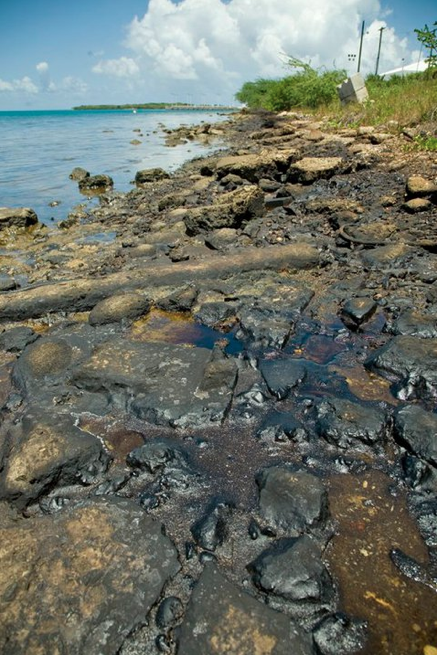
    Then there was the massive oil leak which is still going on. I blogged about the waste oil issue and once again it got plenty of media attention. Click here to read the blog. 
    That was August 23 2010. Again, what do you think happened about it? Nothing of substance at all. What did happen was that I was invited to the Prime Ministers Office to discuss the issue. Not too long after that PM Baldwin Spencer opened the "new" Wadadli Power Plant (Chinese generation plant). In his speech up at Crabbs Peninsular he spoke about building a waste oil recycling plant which would be able to deal with all the waste oil that these new generators would go through. What do you think happened? You got it. NOTHING. Oil is still exactly as it was back on August 23 2010. Again where is the environmental policy of the UPP and the Solitaire player?


    Staying with the Environment. Remember how hard we had to fight to get the new Fisheries Regulations? While it takes great skills to be a bad ass solitaire player on your computer screen, people shouldn't be paying the salary of a Minister to do that while years and years go by with legislation sitting unsigned on his desk. This is the same minister who convinced to Cabinet of Antigua and Barbuda to issue executive orders to the Fisheries department and Coast Guard to stop enforcing the law on spear fishing. Whether you agree with that type of fishing or not isn't the point. Baptiste did nothing for fisheries until we the people forced him to. Read more in this little blog post.

    What happened to the Environment Management Bill? Another one stalled by Minister Hilson Baptiste and the UPP government. All these years later the Environment Division still has no legislative powers which is why so many environmental atrocities happen here each year. It is a piece of legislation that just won't be signed because it takes power away from the Ministers and puts it in the hands of the people and also with the Environment Division.

    More coming as to why I can't support another UPP term coming in Part 5.

    Where my tax dollars went over the past ten years. Part 3

    In Part 1 and Part 2 I spoke about horrific wastes of tax dollars which have left this country broke despite the UPP government doing the best job in history of collecting revenue. No government in this country has collected as much tax money as they have. Not even close, but we are broke. According to a leading economist, the ALP never collected more than EC $180 million in any year that they were in power while the UPP has collected as much as EC $778 milllion in 2008. Read Part 1 and Part 2 and then keep reading. There is sadly plenty more.

    Remember Royal Antiguan Hotel? This little exerpt from Uncut Journal spells it our better than I can: "Take the example of the sale of Royal Antigua hotel, valued at $32M us dollars sold at $18M. The money received from this sale was used to pay one week of payroll. In other words yesterday the people of this country owned a hotel with 300 rooms 50 acres prime beach land with a 250 million dollar debt attached, today the people of this country still owes the debt of 250 million and nothing else. The government of Antigua and Barbuda sold the Royal Antiguan  hotel and used the money received to pay one-week  wages of its public workers". Value for money once again. Leadership matters there for sure.

    Then there was and is the huge waste of money with APUA PCS and INET.

    During the late 80s and early 90s our nation was lucky enough to have some very bright Antiguan and Barbudan kids away in engineering schools. Some came back with the hope of helping our nation achieve excellence in IT. It was because of their hard work and some forward thinking within APUA and government that APUA was able to start it's own mobile phone company called PCS. Years later they launched home internet with a company called INET. These companies not only worked well but made good profits for APUA. PCS reported profits of up to $10 million EC in one year. It was at that time that the UPP started speaking about selling PCS. They were going to sell the hospital and the port too. That didn't happen. The technical minds of APUA telecoms decided to expand and spend more on newer technologies. Plans were made to launch 3G and then 4G long before any of their competitors. Then certain arms of the UPP government decides to start negotiating with Digicel to help make Digicel a bigger and better network than their own PCS. They stopped listening to the head of their Telecoms department and stopped spending the money PCS was making for them on expanding and upgrading. The UPP negotiated with Digicel to get 4G in exchange for a fraction of what the license was valued at in exchange for moneys and the rest in tablets for school kids. Essentially while one arm of the government was trying to uses its brightest and smartest to better ourselves with our own mobile and internet carrier another arm was helping Digicel get ahead with strange deals that made no sense from a financial point of view. Yesterday in the news we heard that Digicel is getting a contract to put cameras around the city. According to a report on ZDK the sum was EC $8 million which would be piad to them in the form of withheld ABST (sales tax). No bidding on that contract happened. There is plenty more on the relationship with Digicel and the government that could be discussed, but tens of millions have been thrown away as the UPP government have slowly destroyed our own PCS mobile while supporting Digicel. Our brightest technical men and women are no longer leading their destiny.

    Speaking of smart Antiguan and Barbudan men and women. The UPP decided to bypass them by contracting a UK firm to build our tourism webiste and online platform for EC $2 Million. This was one of the biggest wastes of money in tourism. No it wasn't. Royal Antiguan was. Anyway, it was a major slap in the face to tax payers and the hundreds of young highly technical IT and online marketing citizens. Remember that under the ALP government Antigua and Barbuda became the leading place on the planet for online gaming. Billions of dollars in online marketing was spent from this little island by companies managed jointly with young Antiguans. We had kids working in every aspect of IT and web design, SEO, new media marketing were all part of our highly skilled workforce. Many of these kids went off to bigger and better things internationally but many are still here. Many were displaced when sports books and online casinos moved outside of Antigua or shut down and some started businesses of their own. The point is, SEO, new media marketing and other aspects of IT are not things we needed to farm out to a company run by a young kid from the UK who came here on a cricket holiday. I don't need to question how he got the job or whether he was experienced enough to do a good job, but I will say that we didn't get value for money with the two contracts for 250K Sterling each. After recent criticism there were some within the UPP that tried to say that the moneys were for a complete marketing campaign, but this isn't true at all. I know what it was for because I met with the Minister responsible and was told over several hours all about it. There was no moneys for print marketing and none that I am aware of for paid adverts online either. This 2 million EC was for setup and training of www.visitantiguabarbuda.com, the online booking side of the portal and the ministry's facebook page.  It took forever to get finished. In fact so long that they launched it prematurely due to internal pressures. I was amazed at the sheer amount of mistakes in basic web design and navigation. The online booking section didn't work either. During the first week I did many tests. One of them was trying to book a round trip ticket from Toronto to Antigua. The only option I was given by this 2 million dollar website was The Barbuda Express ferry service from Toronto. After spending 14 years of my life studying SEO and new media marketing I could go on an on and on about the shortfalls of the site, but I will say categorically that in my experience we didn't get value for money and I can't figure out how it cost so much money. Several leading hotels asked to be removed from the site. By the way, my company is the only excursion/activity company to go through their over the phone training and set up our account with them to receive online bookings. We have not received a single booking in the nearly 2 years it's been up. Meanwhile bookings from Shoretrips, Shorex, Islandroutes, my websites and others keep pouring in thankfully. Until recently if you did a google search for "Antigua" you couldn't find their site. Now I see they are ranked 7th. Antiguanice.com is ranked 4th. By the way, the highly experienced online tourism professionals at Antiguanice were not consulted at all or notified that they could bid on the EC $2 million contract. Neither were any other Antiguan companies or individuals. My little website that cost a few hundred dollars to build is ranked 13th.

    I could go on an on about moneys being wasted left and right. The tax and spend has been terrible and while some key players have made huge profits, the majority of the people in this country are worse off financially today than they were ten years ago. We should never forget that this government instituted bold new taxes and collected more tax than had ever been collected in history. According to one of Antigua's leading economists Petra Williams: "the ALP never collected more than $180 million dollars in a single year. There have been years under the UPP where they collected as much as $778 million..." With that in mind, did we get value for our money? Did they spend our money wisely?

    Part 4 will be more to do with bad decisions and incompetence than direct wastes of money.